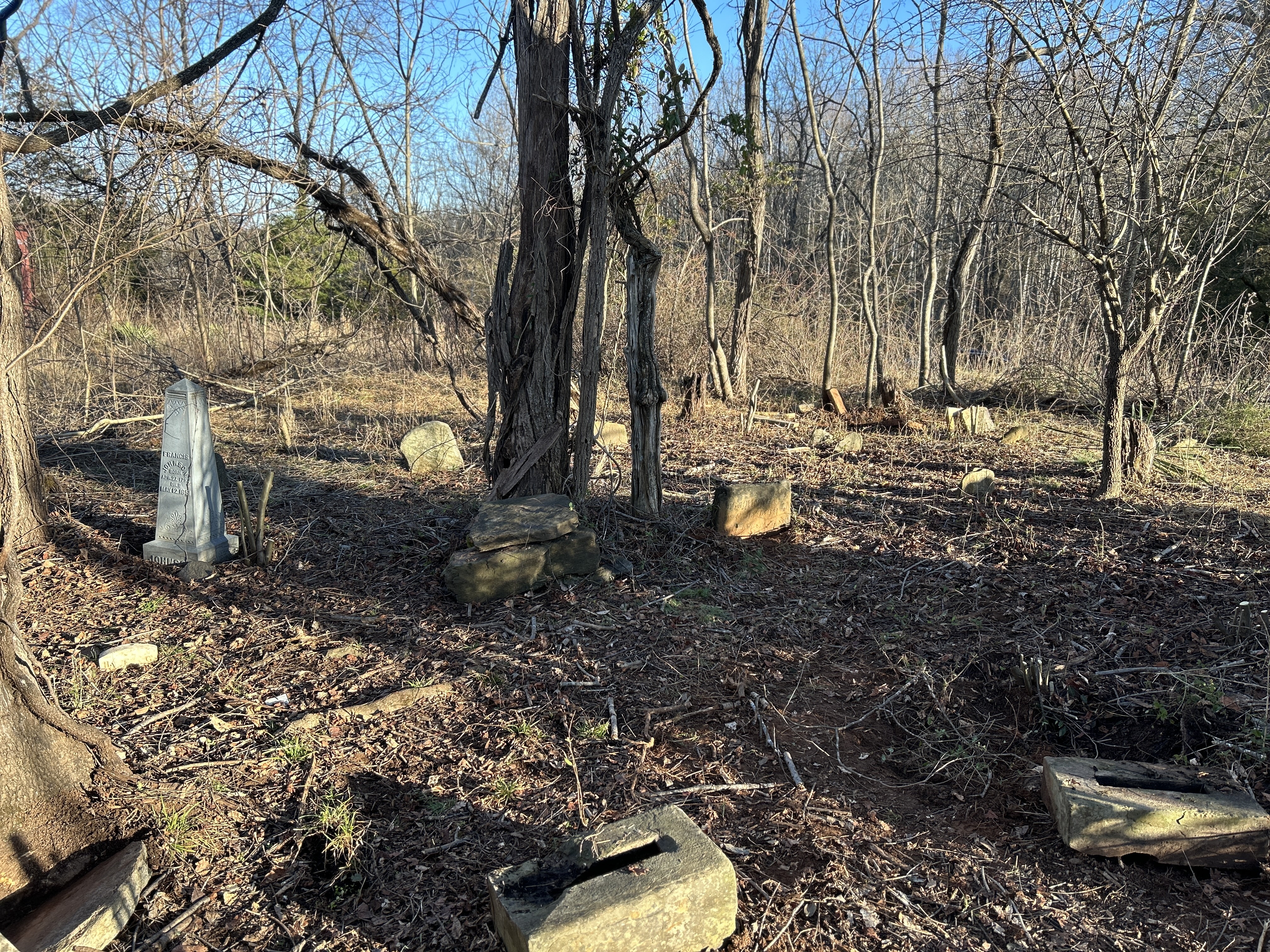
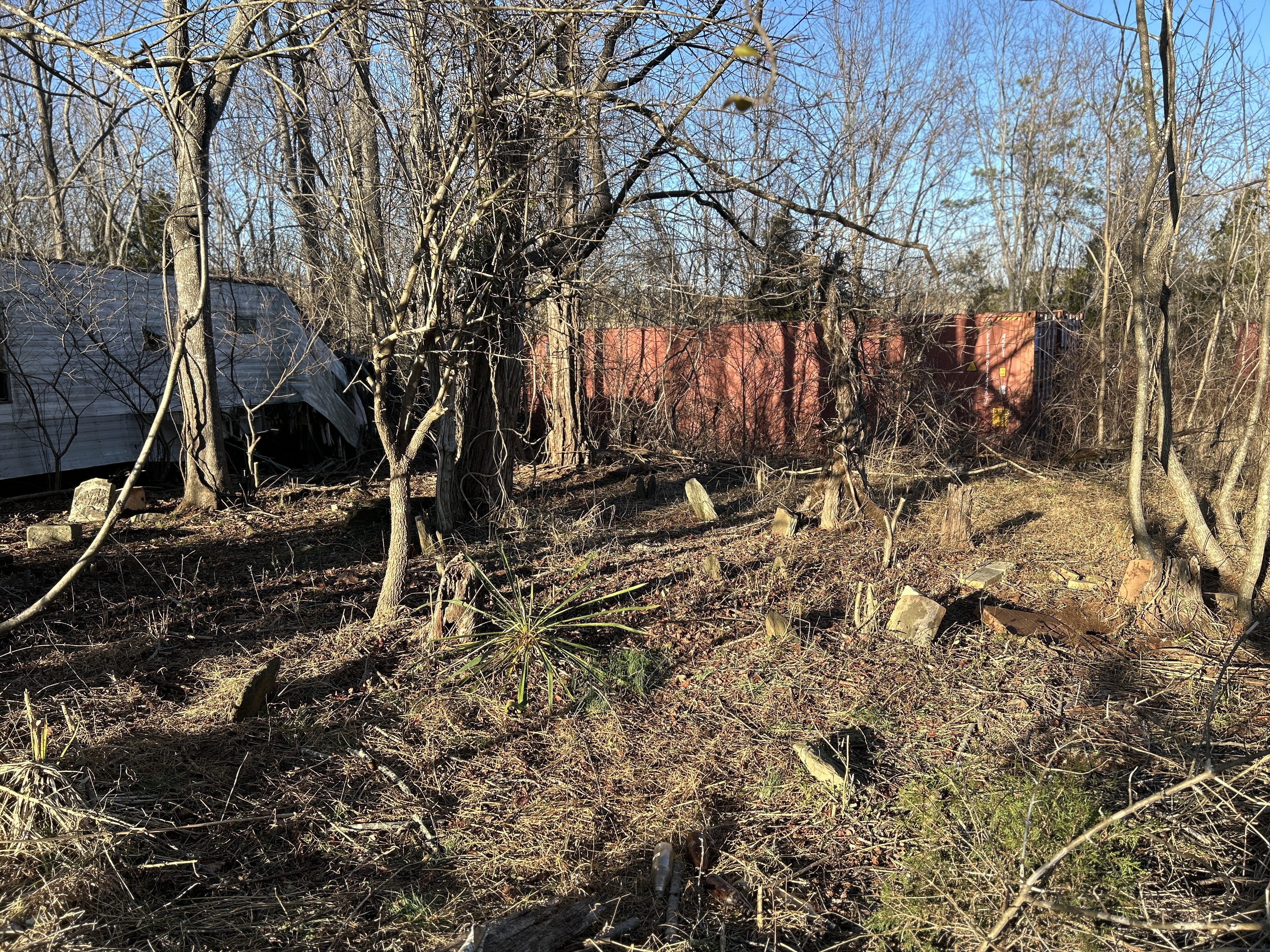
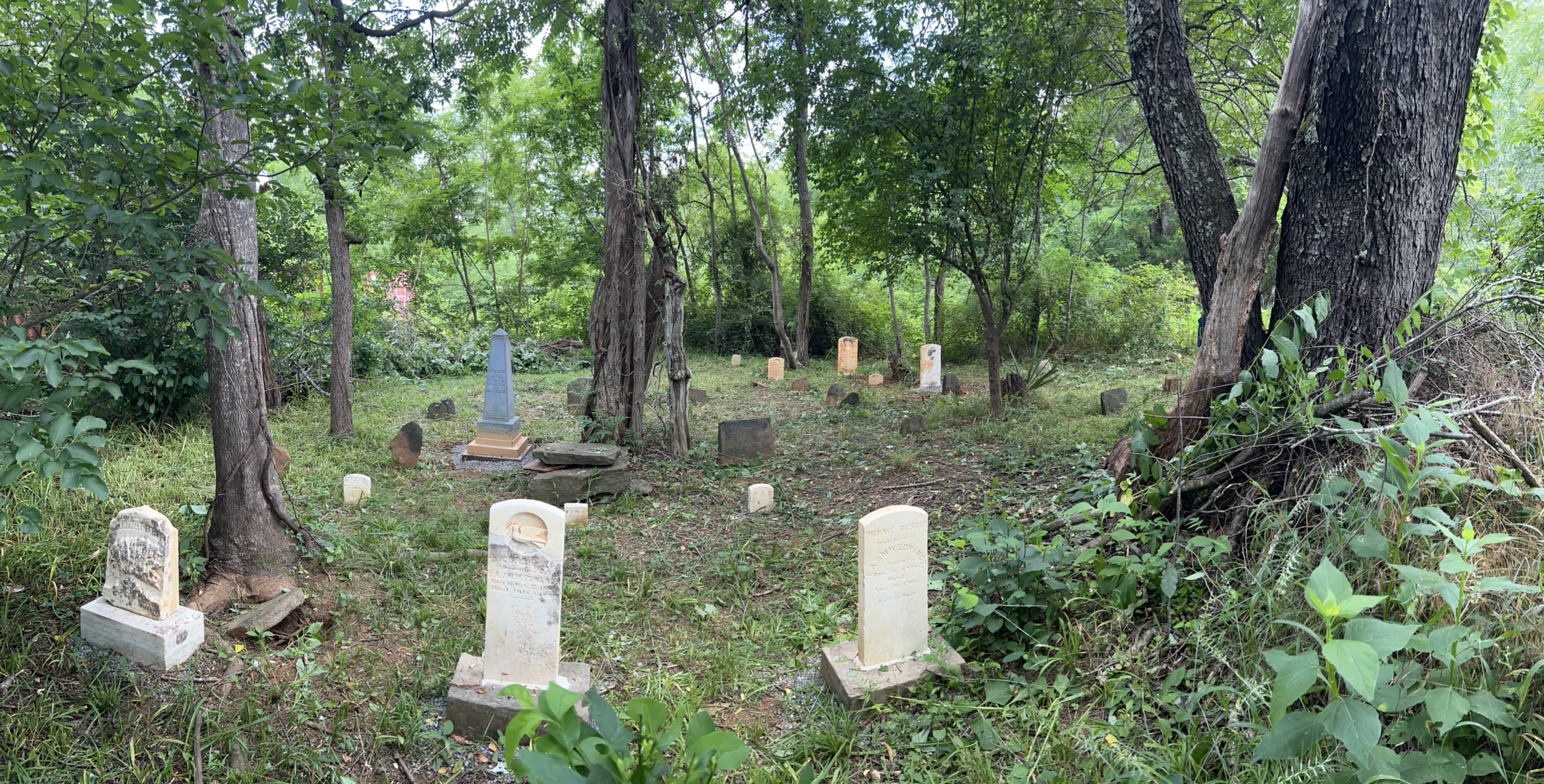
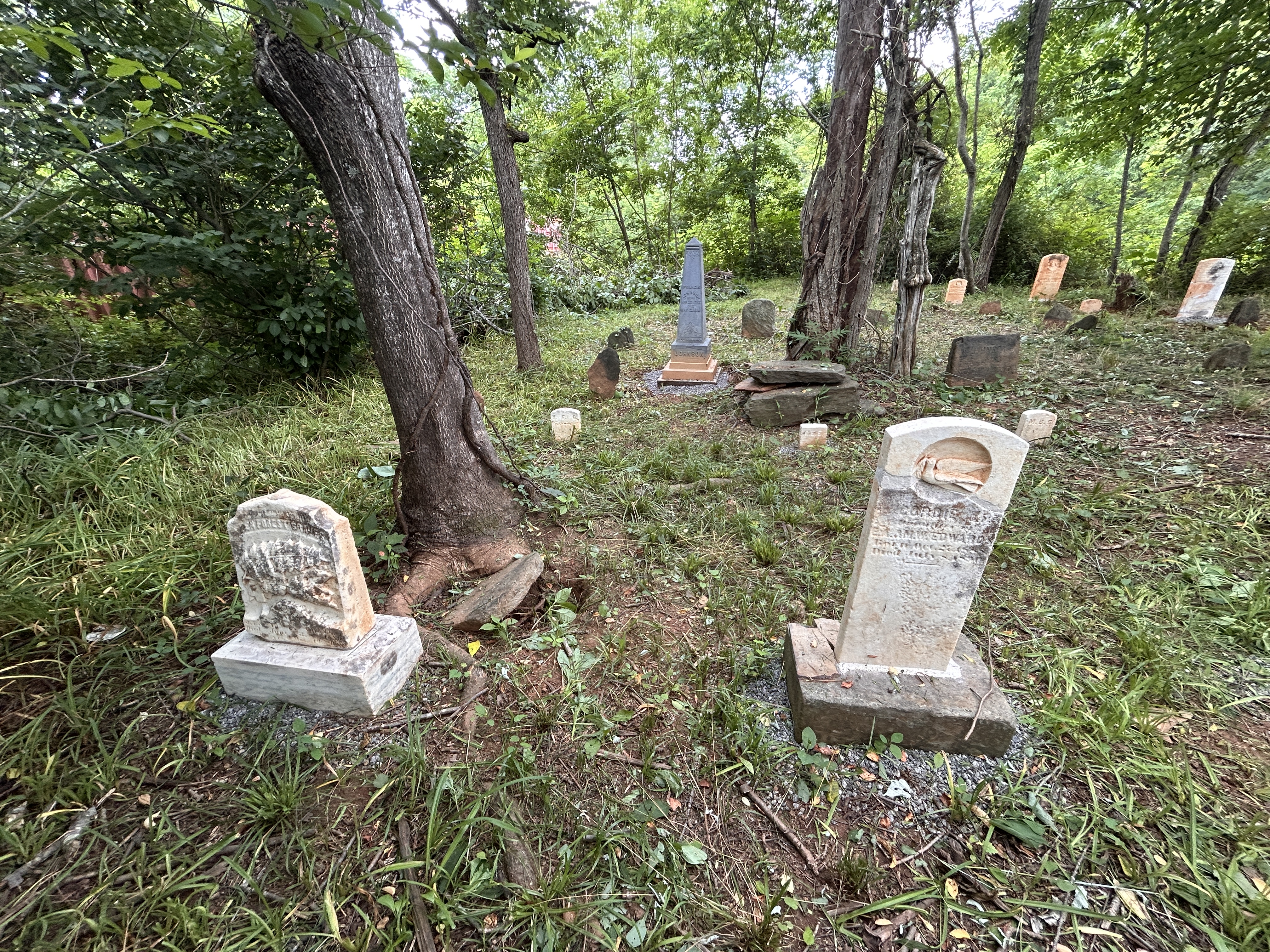
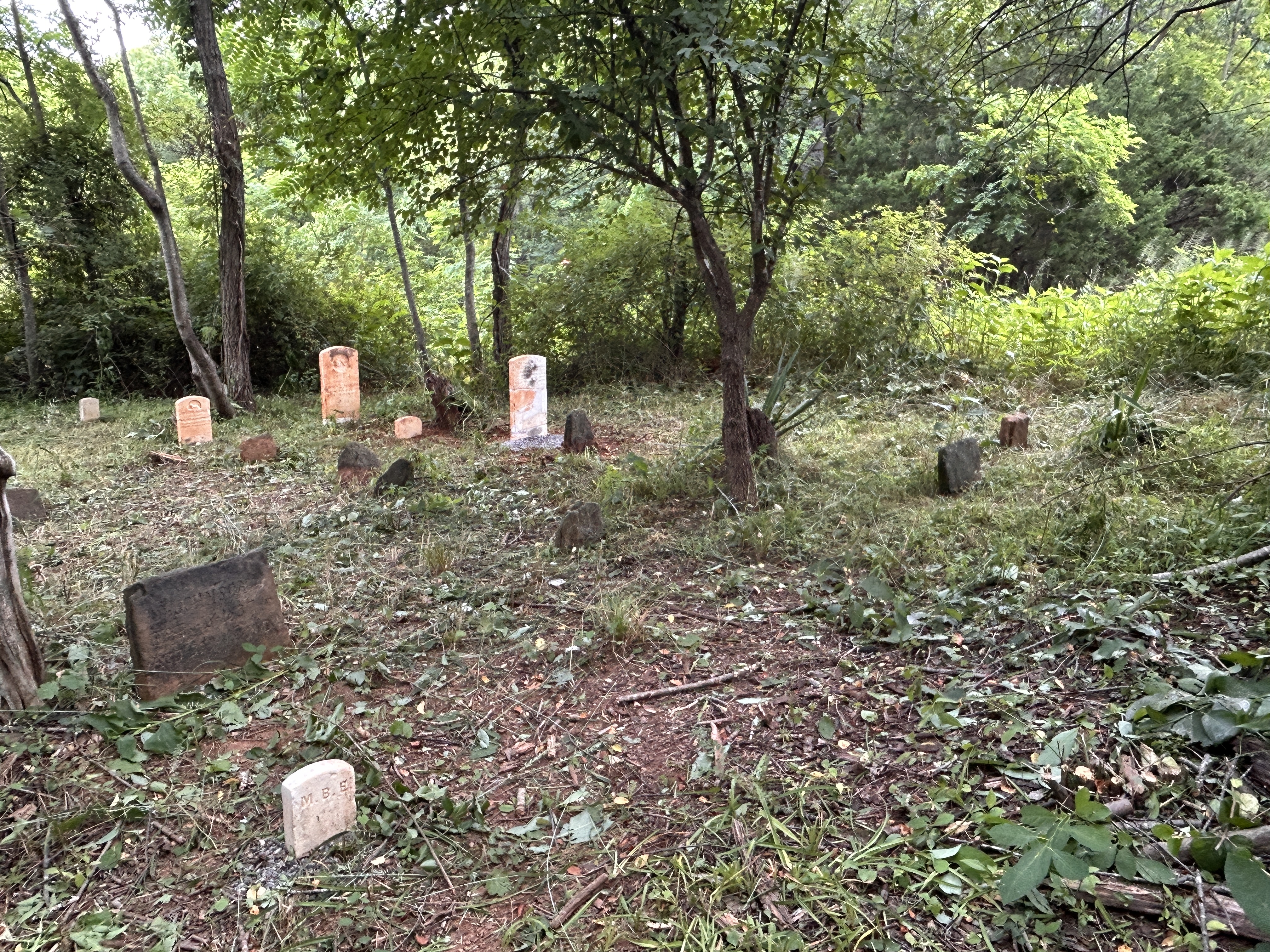
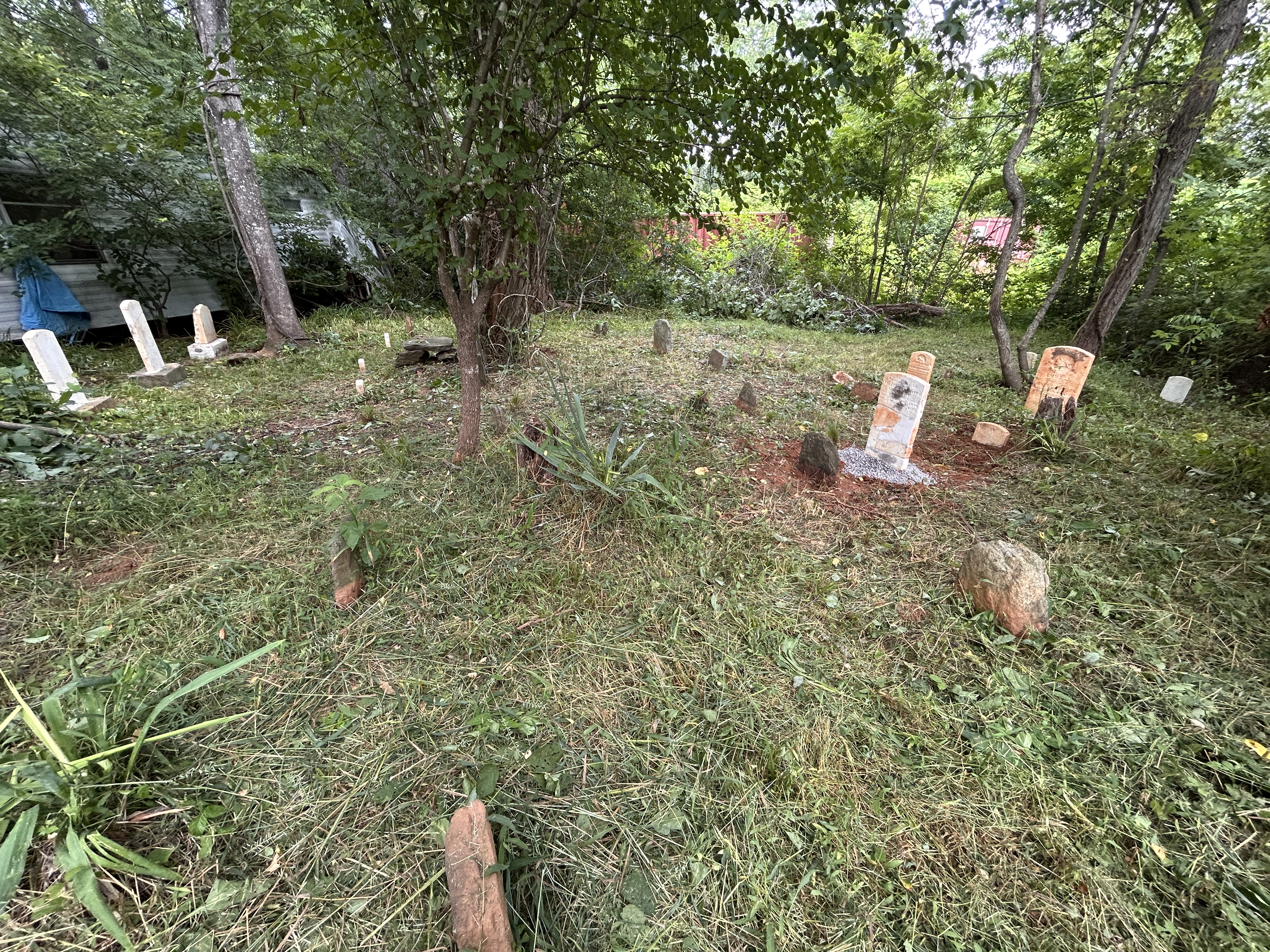
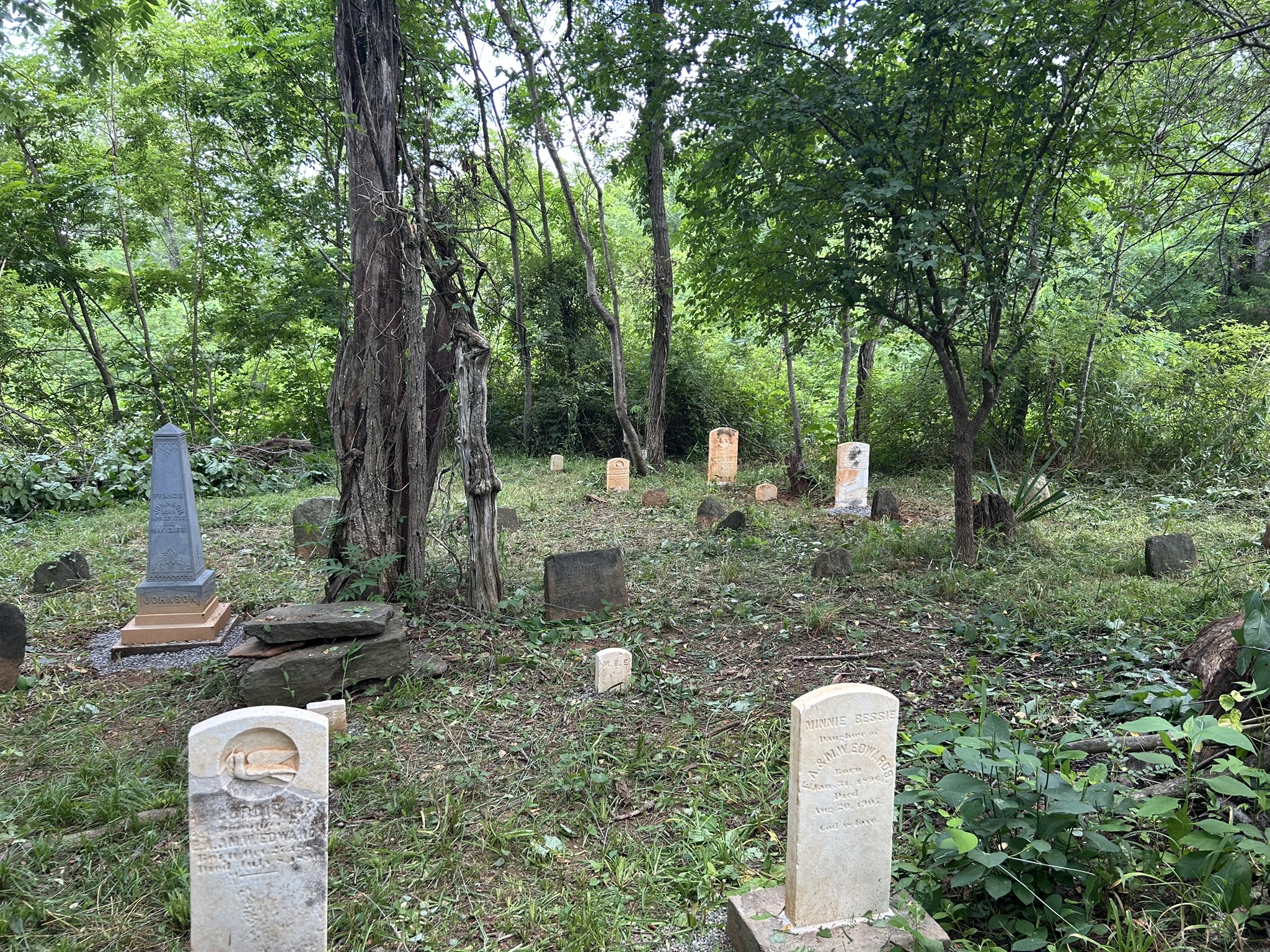
The Francis Johnson Burial Ground (#352) was identified while we were in search of an unrelated site. In 2022, a descendant of Francis’ brother, George Johnson, guided us to its location during their own effort to rediscover George’s resting place. By the winter and spring of 2025, we had established contact with the landowner and were able to properly visit and document the grounds. The condition of the site was severe: a zinc obelisk stood amid fragments of broken marble and a scattering of fieldstones, all situated before the remains of a collapsed mobile home. As the accompanying photographs illustrate, the setting conveyed both neglect and stark contrasts.
As bleak as the scene appeared, even the most disturbed burial grounds rarely lose all trace of their story — even when a trailer has been driven directly through them! Our first task was to cut back and clear the growth. Unlike many of the sites we have encountered, this plot was not lost within a dense thicket, and the early February season meant there was little ground cover. As a result, we were able to complete the initial clearing efficiently with a chainsaw and brush cutter.
The burial ground was surrounded by a wrecked mobile home and shipping containers
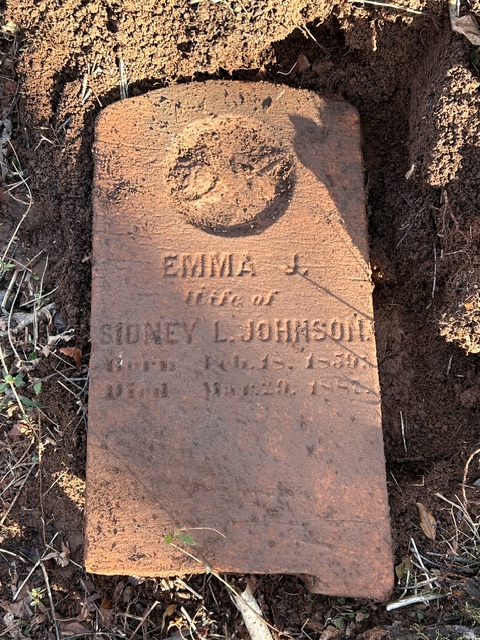
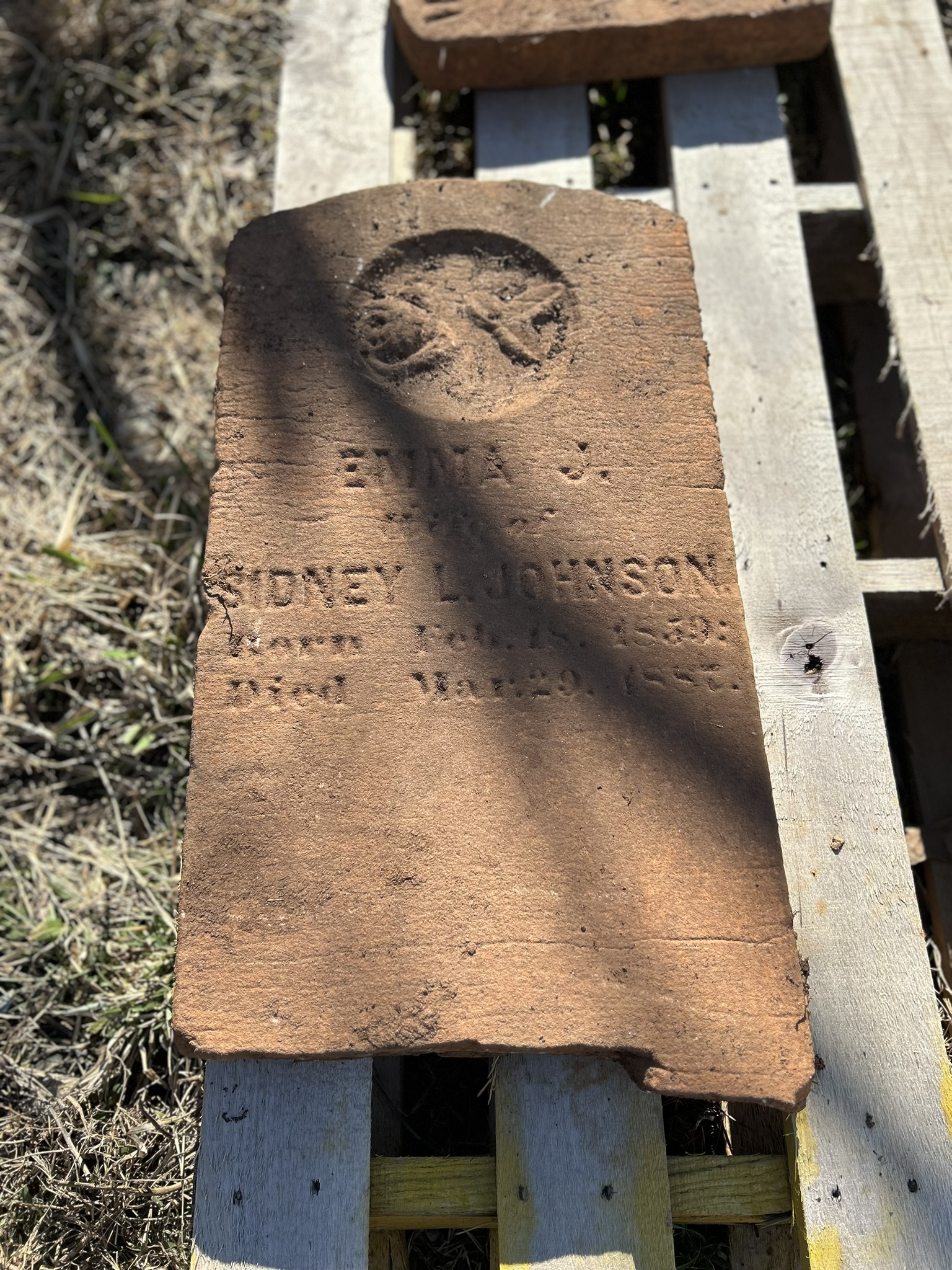
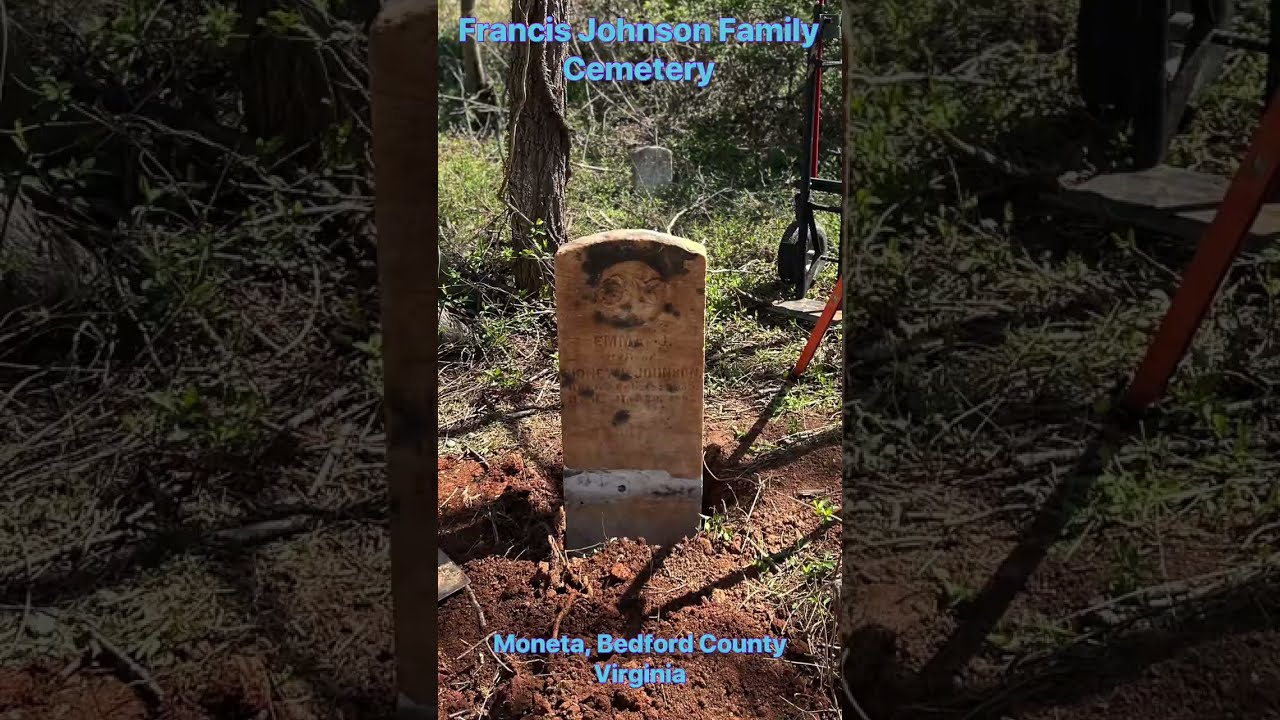
Emma Pullen Johnson's marker at discovery
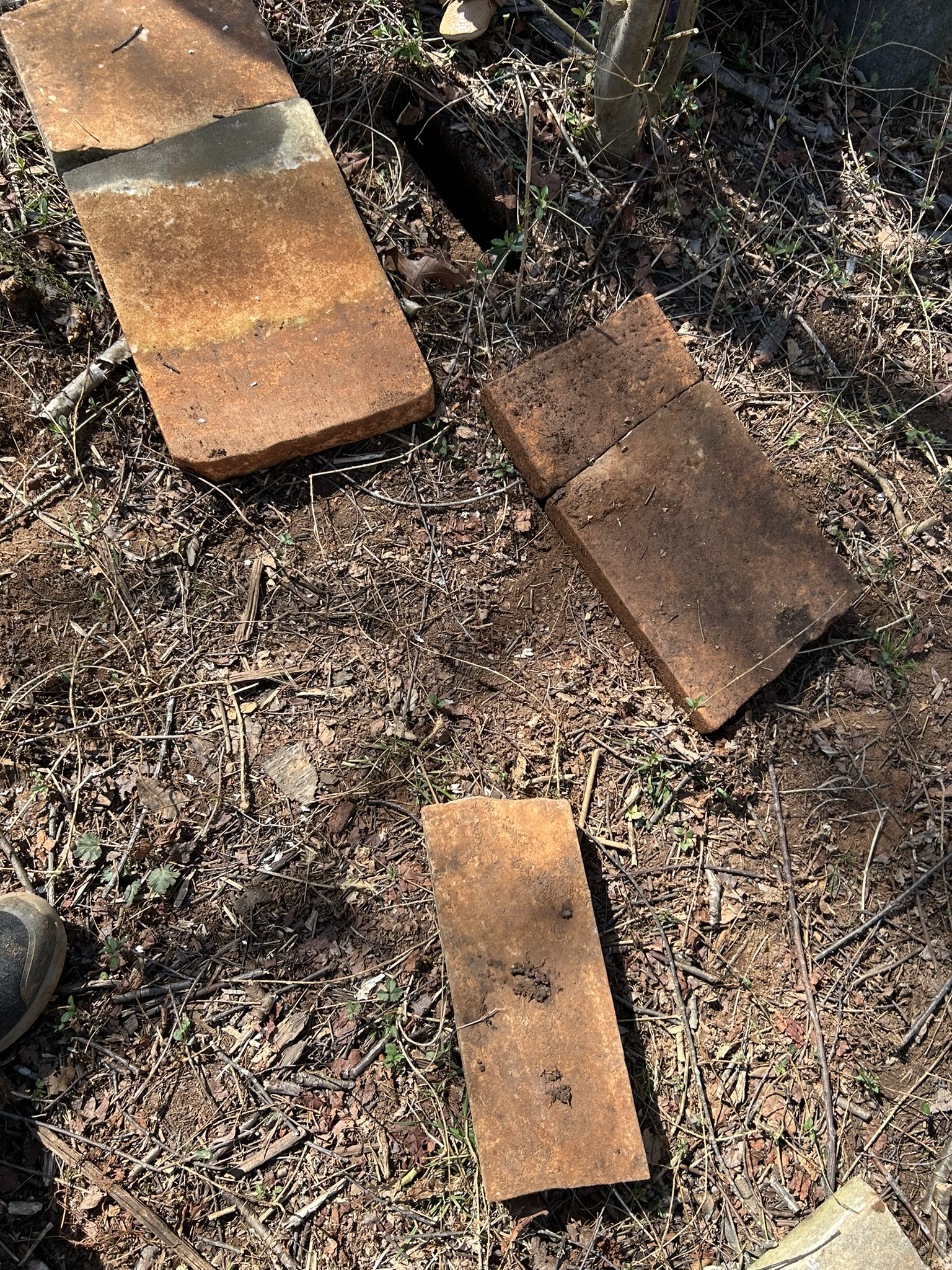
Once the grounds were cleared, the burial plot began to take shape. Several rows of graves became apparent, including empty sockets where markers were missing, a lone marble footstone with no corresponding headstone, and the lower half of a shattered marble monument. Clearly, much remained to be uncovered. Among the most significant finds was an inscribed fieldstone—features we nearly always encounter, yet which are often overlooked in earlier surveys. This particular stone bore the inscription “S. Johnson, 1837,” identifying Susan Holland Johnson, the first wife of Francis Johnson. Markers in Bedford County dating to the 1830s are uncommon, and Susan’s connection as the daughter of a Revolutionary War soldier made the discovery especially notable. Her stone also confirmed that this burial ground had been in use since at least 1837, offering nearly two centuries of history.
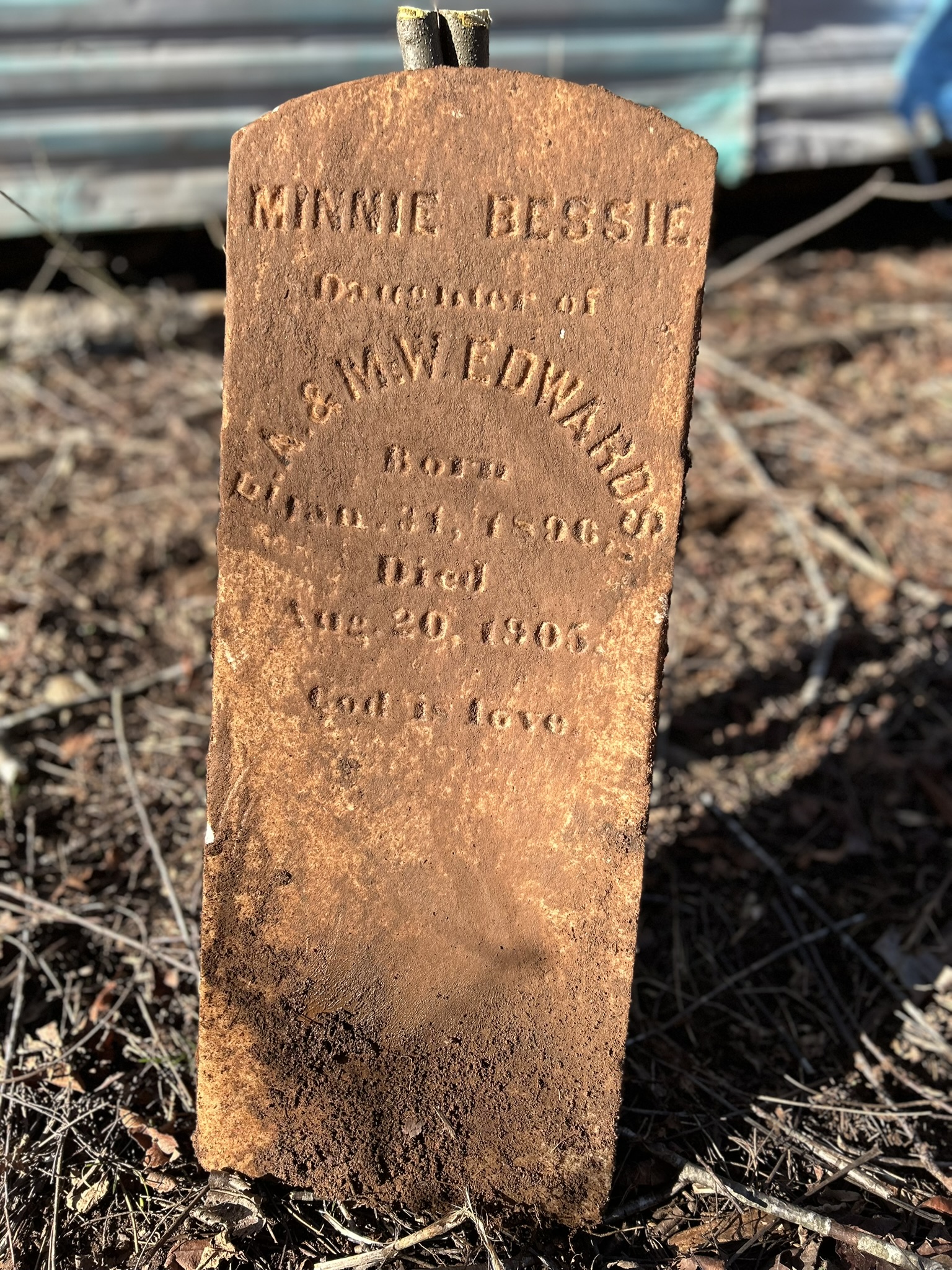
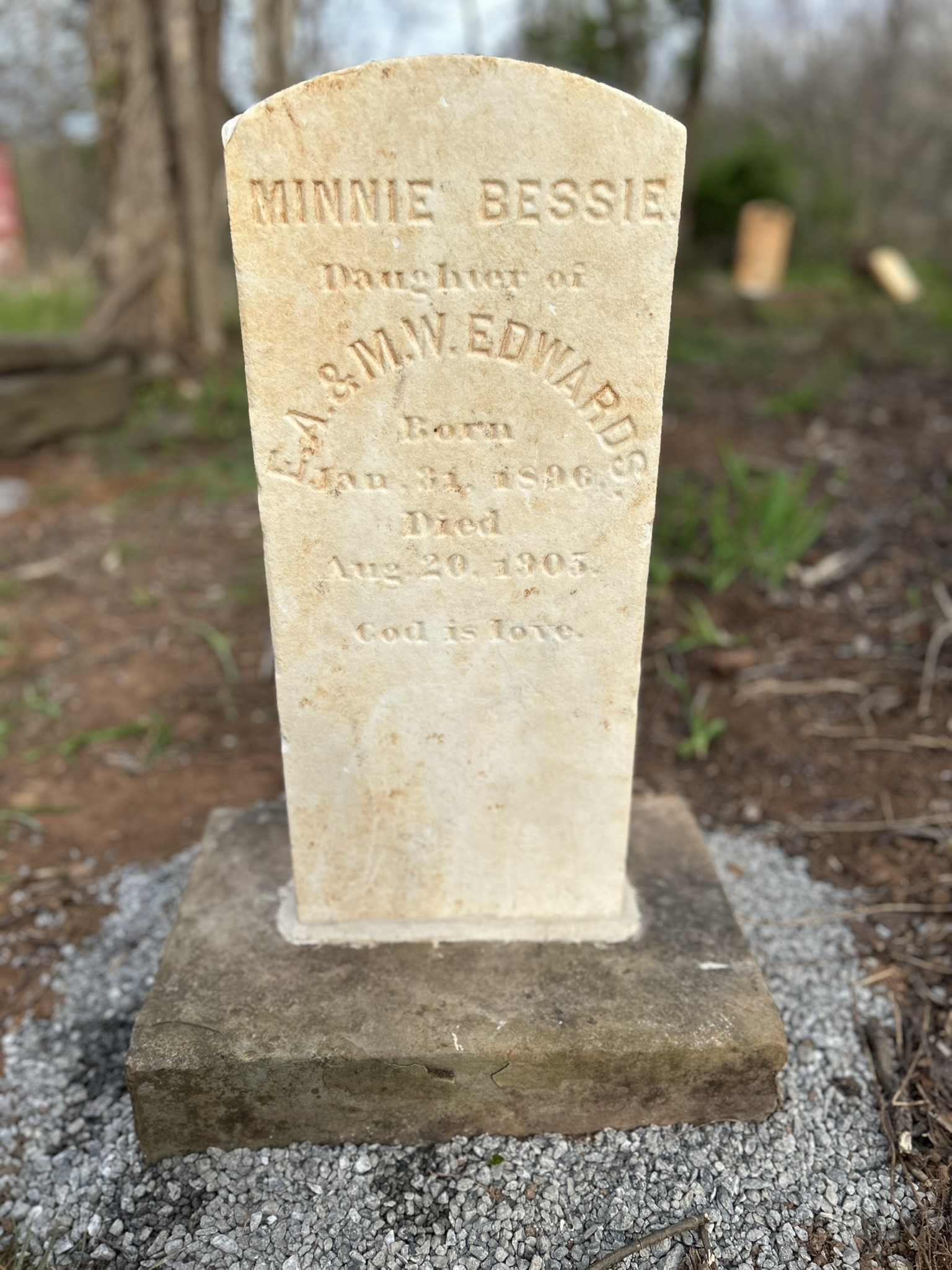
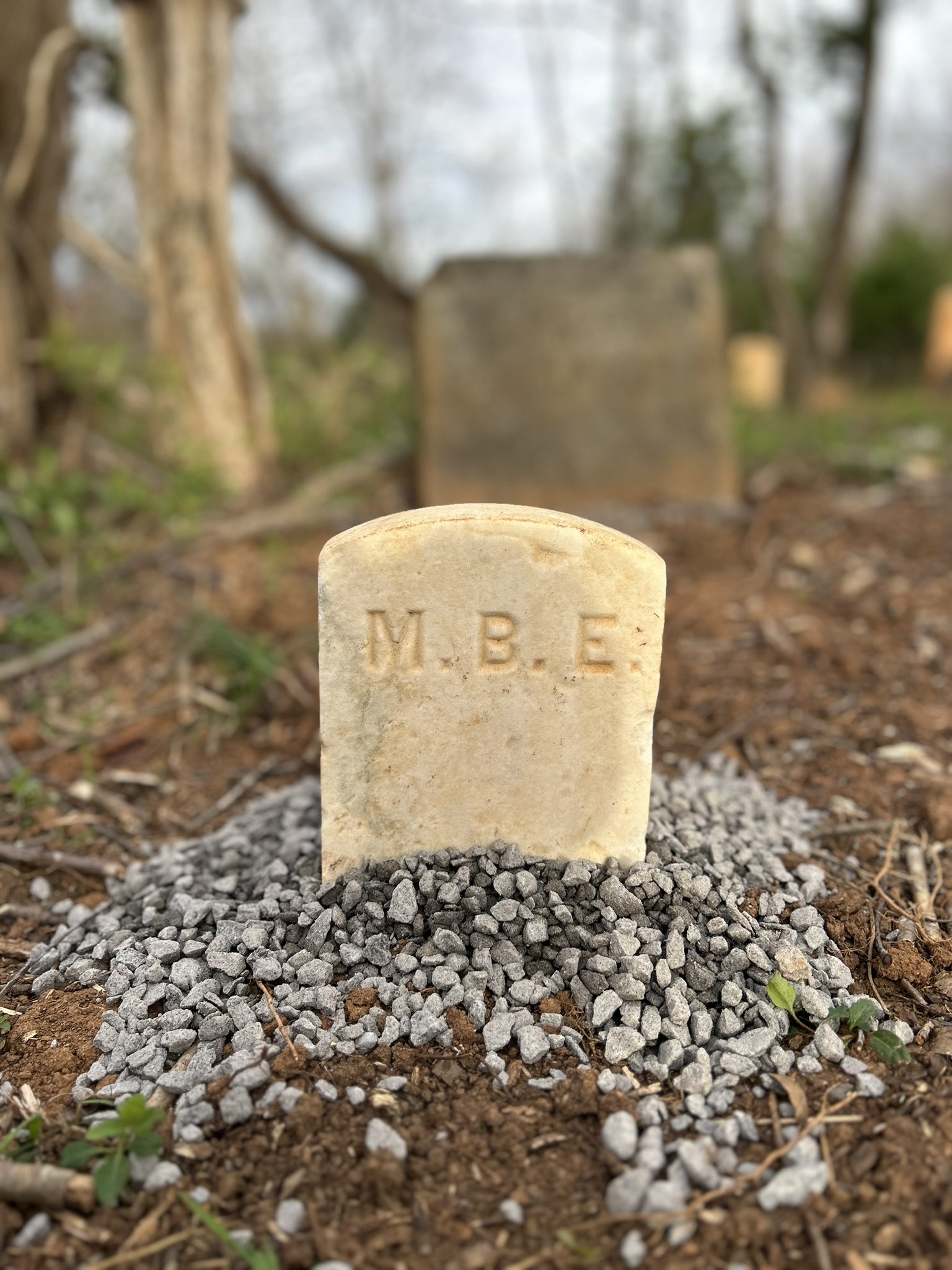
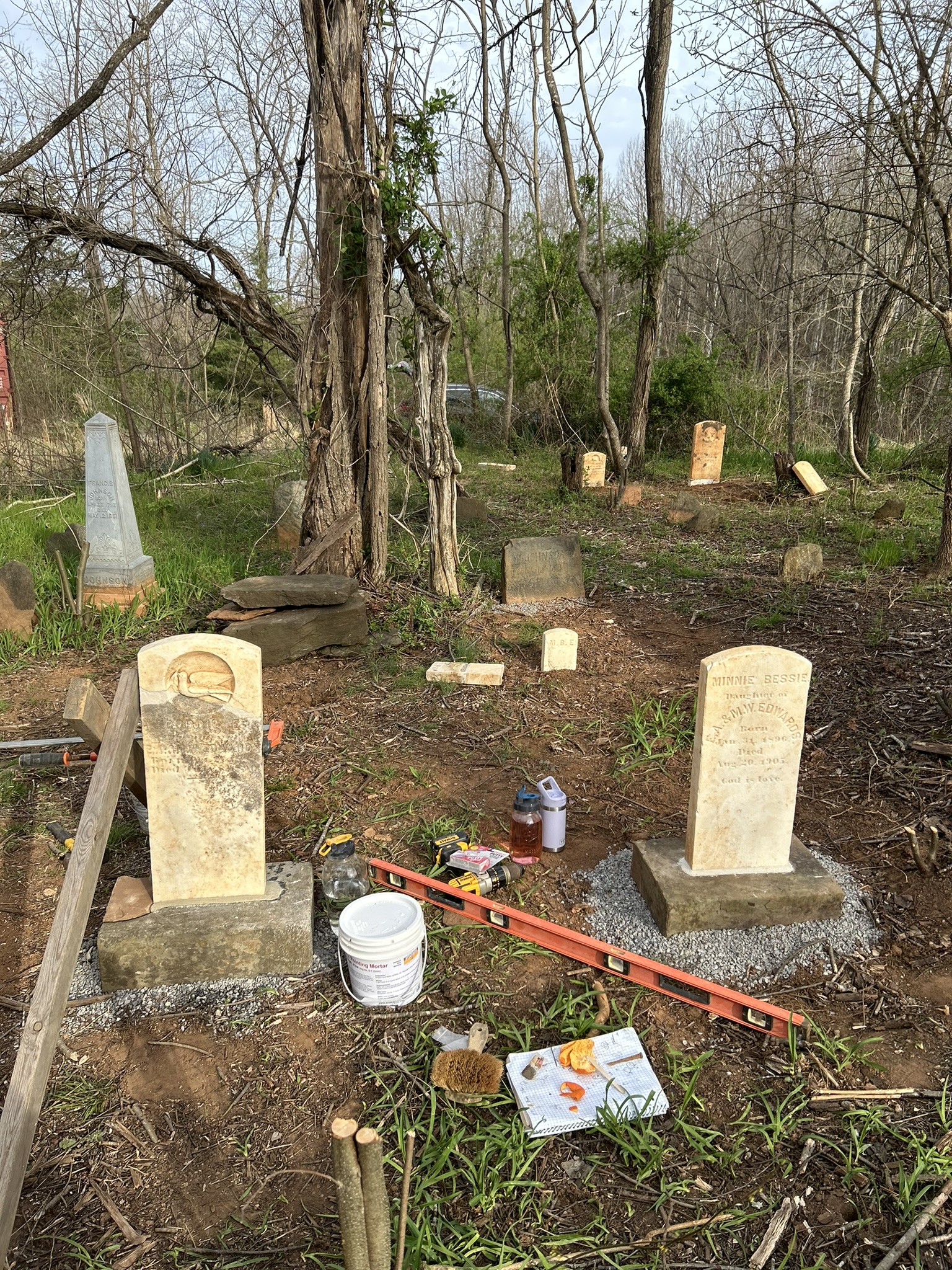
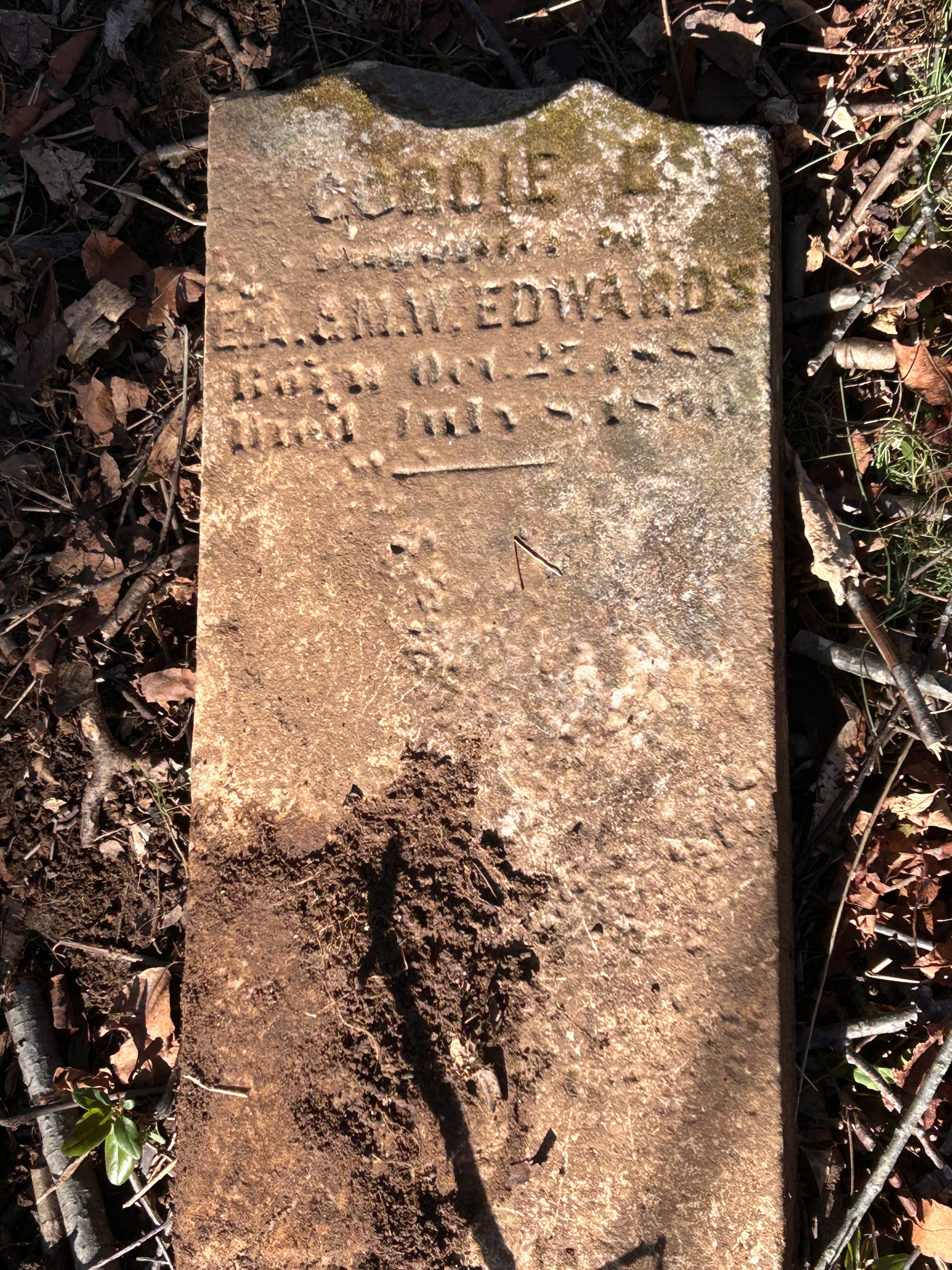
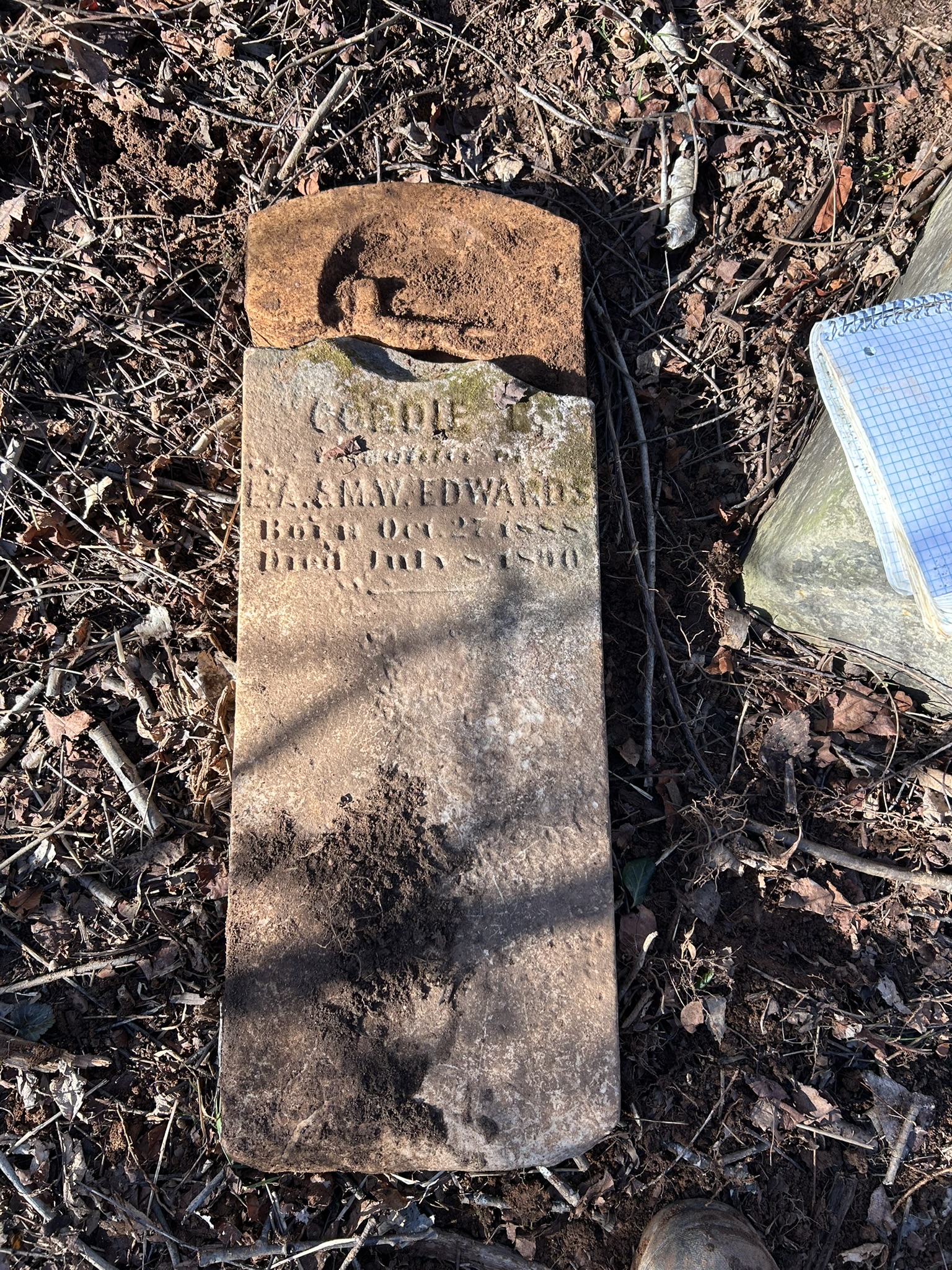
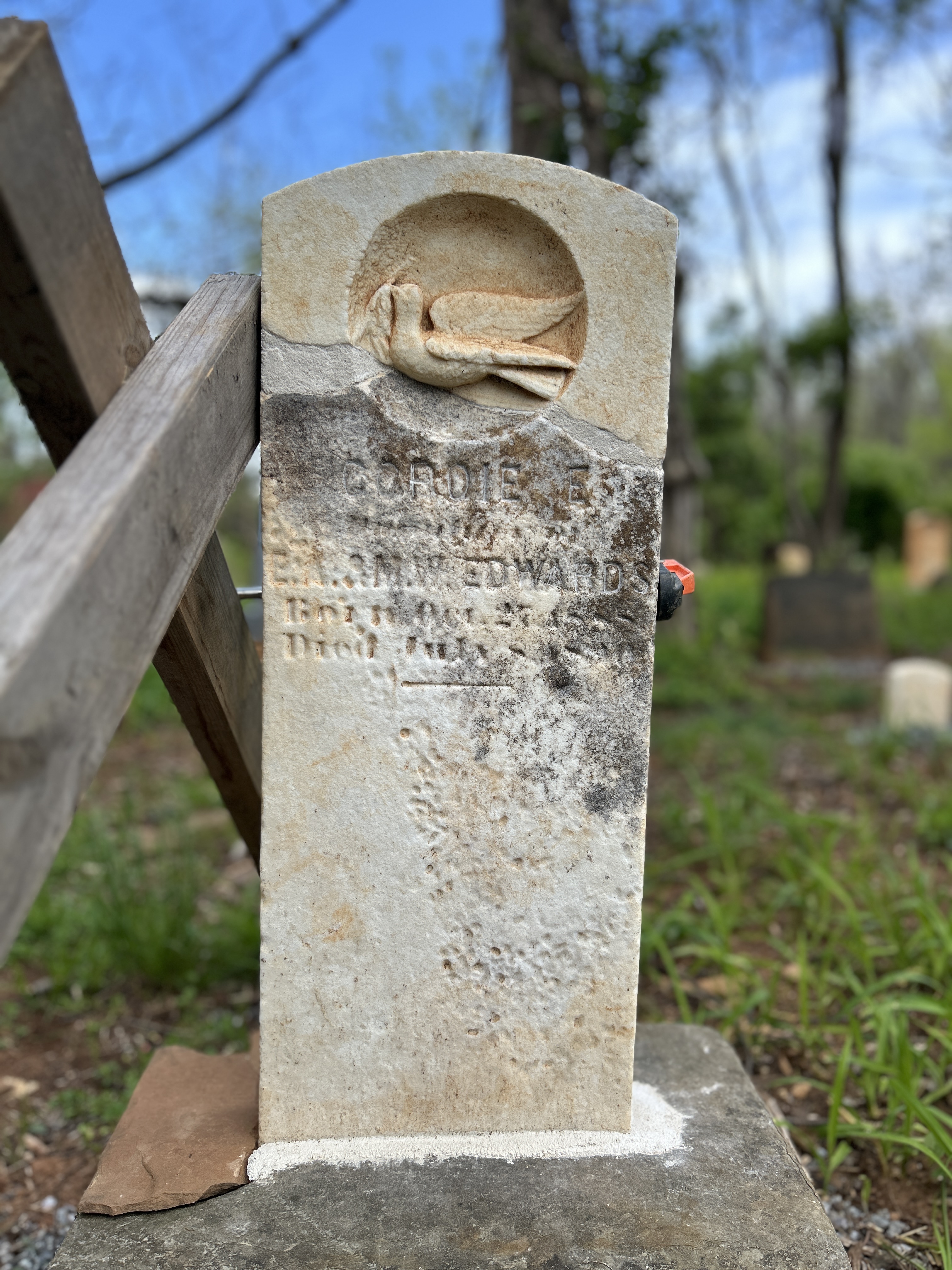
Using depressions, orphaned footstones, and empty sockets as guides, we began probing the plot systematically. Soon, additional markers were recovered, including those for Cordie and Minnie Bessie Edwards—two young girls not previously associated with this cemetery. Research revealed they were great-grandchildren of Francis Johnson, expanding our understanding of the family lines represented here.
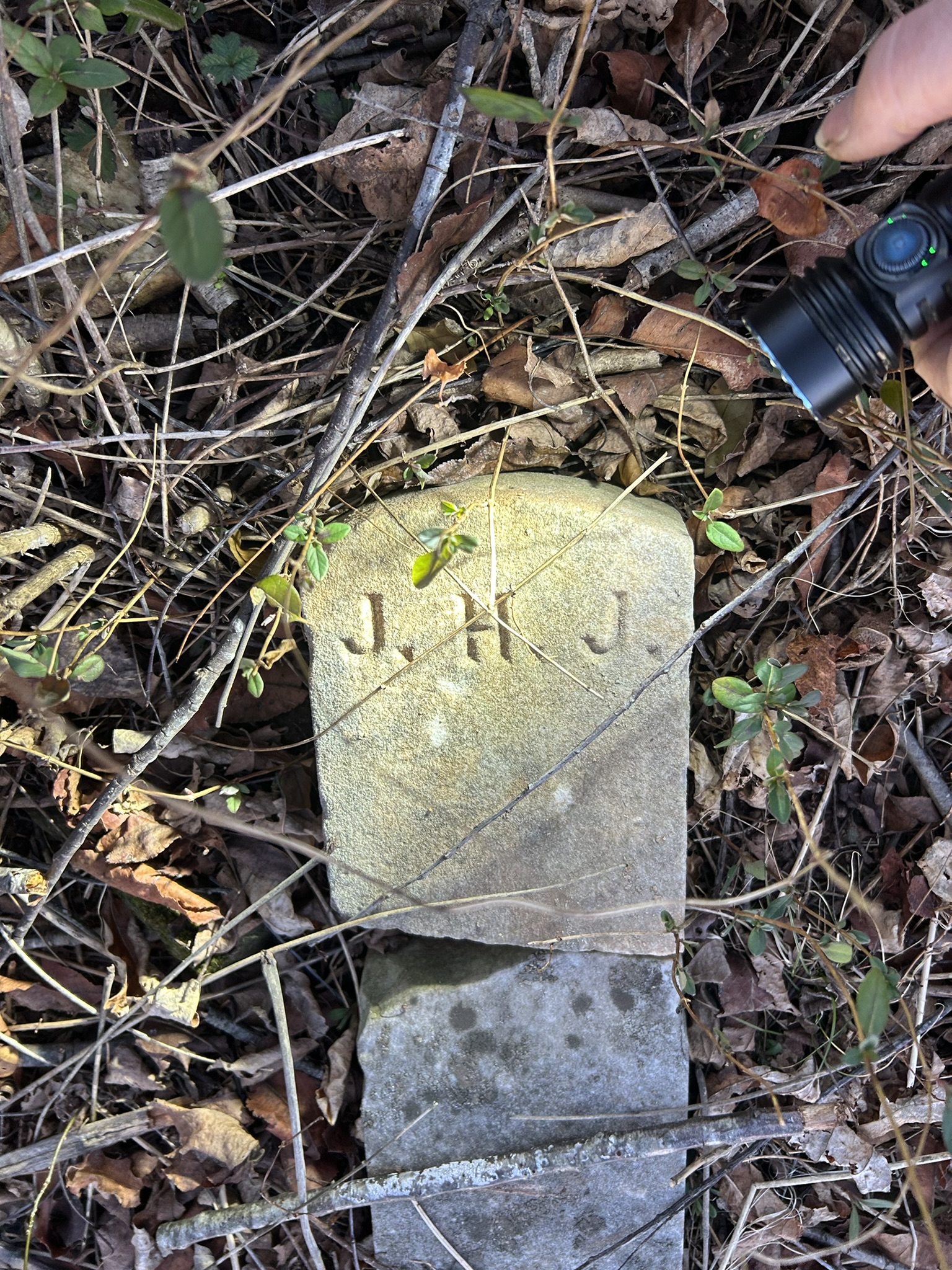
The use of high powered LED flashlights for improved inscription reading
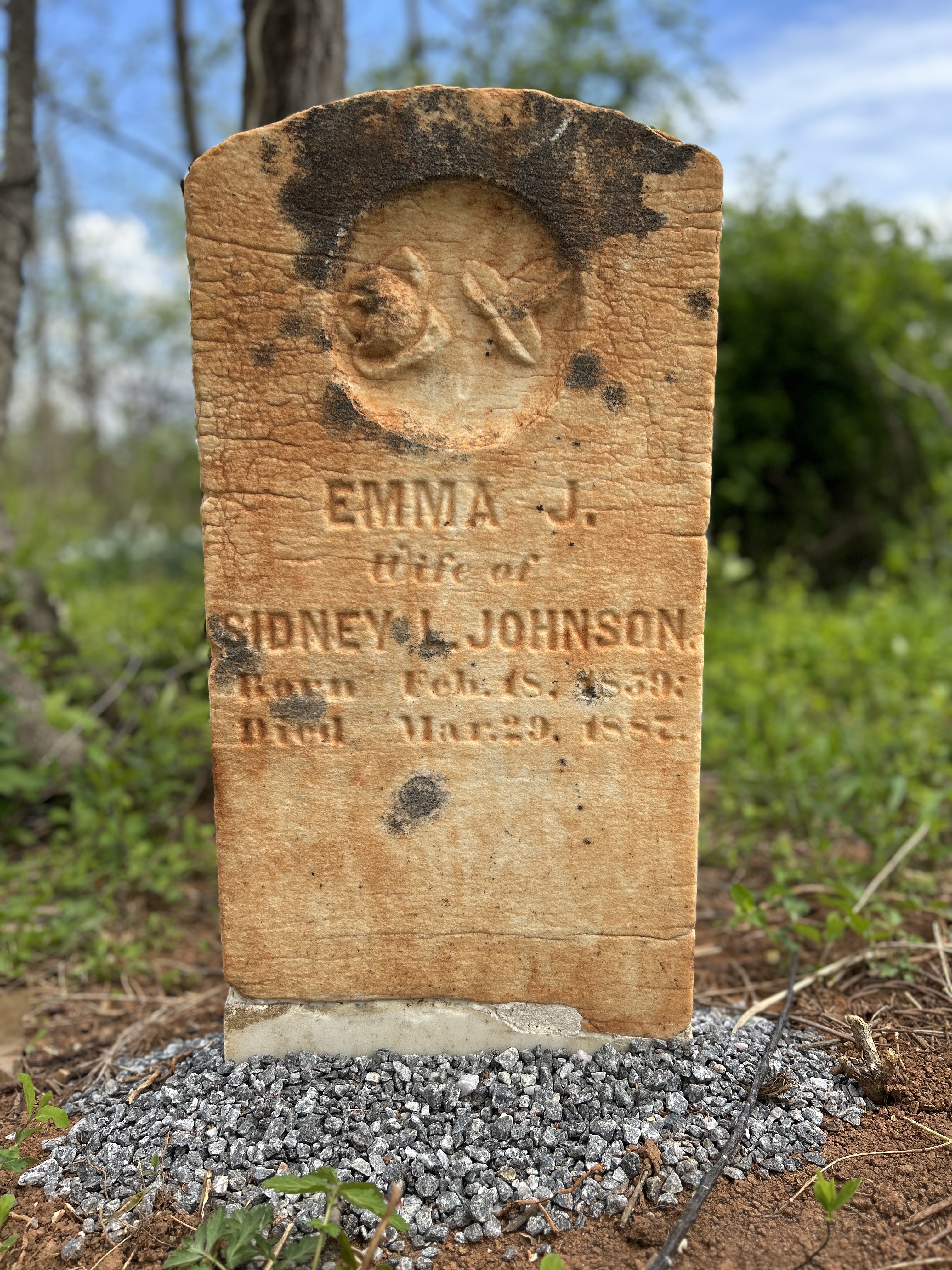
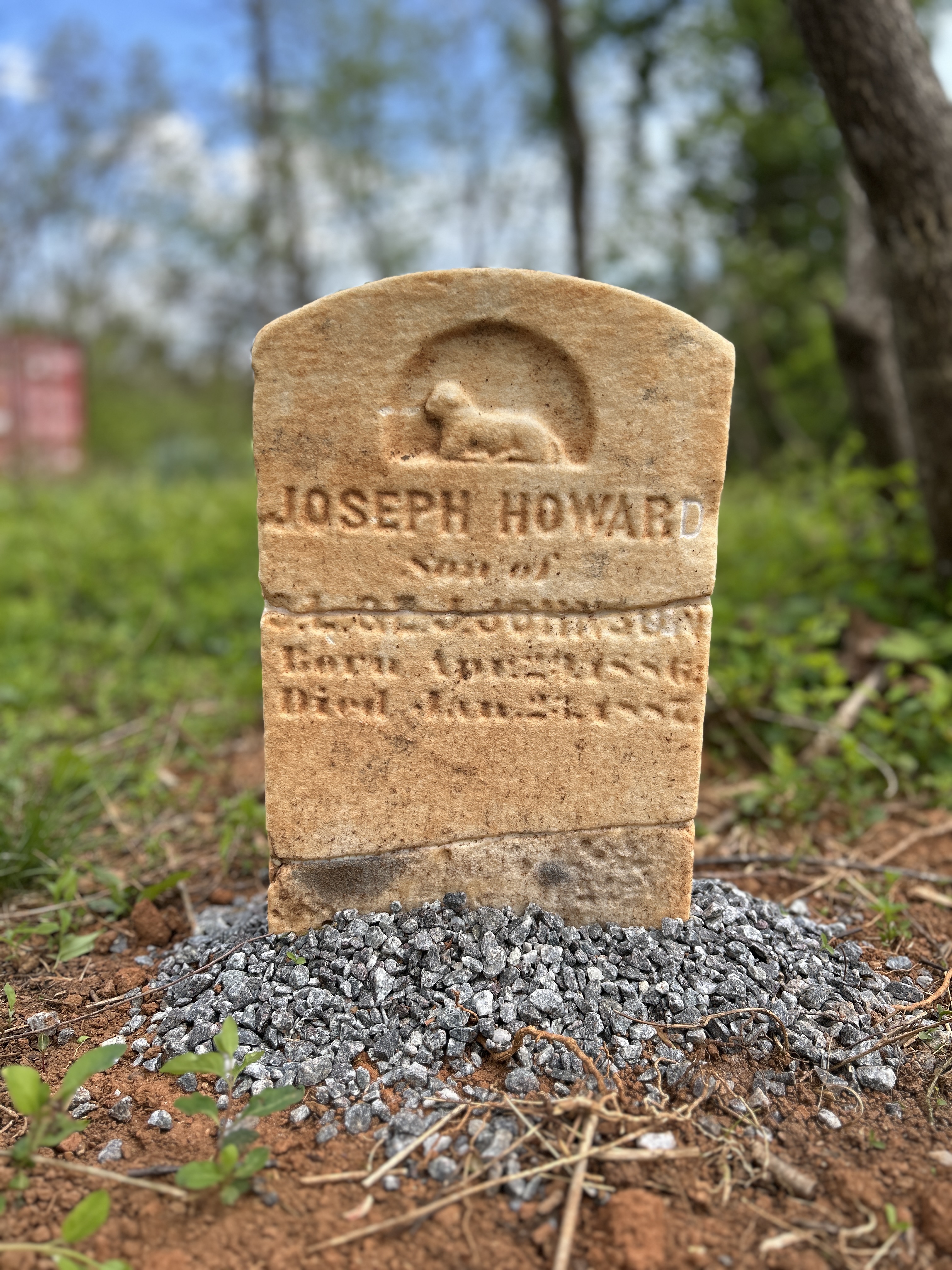
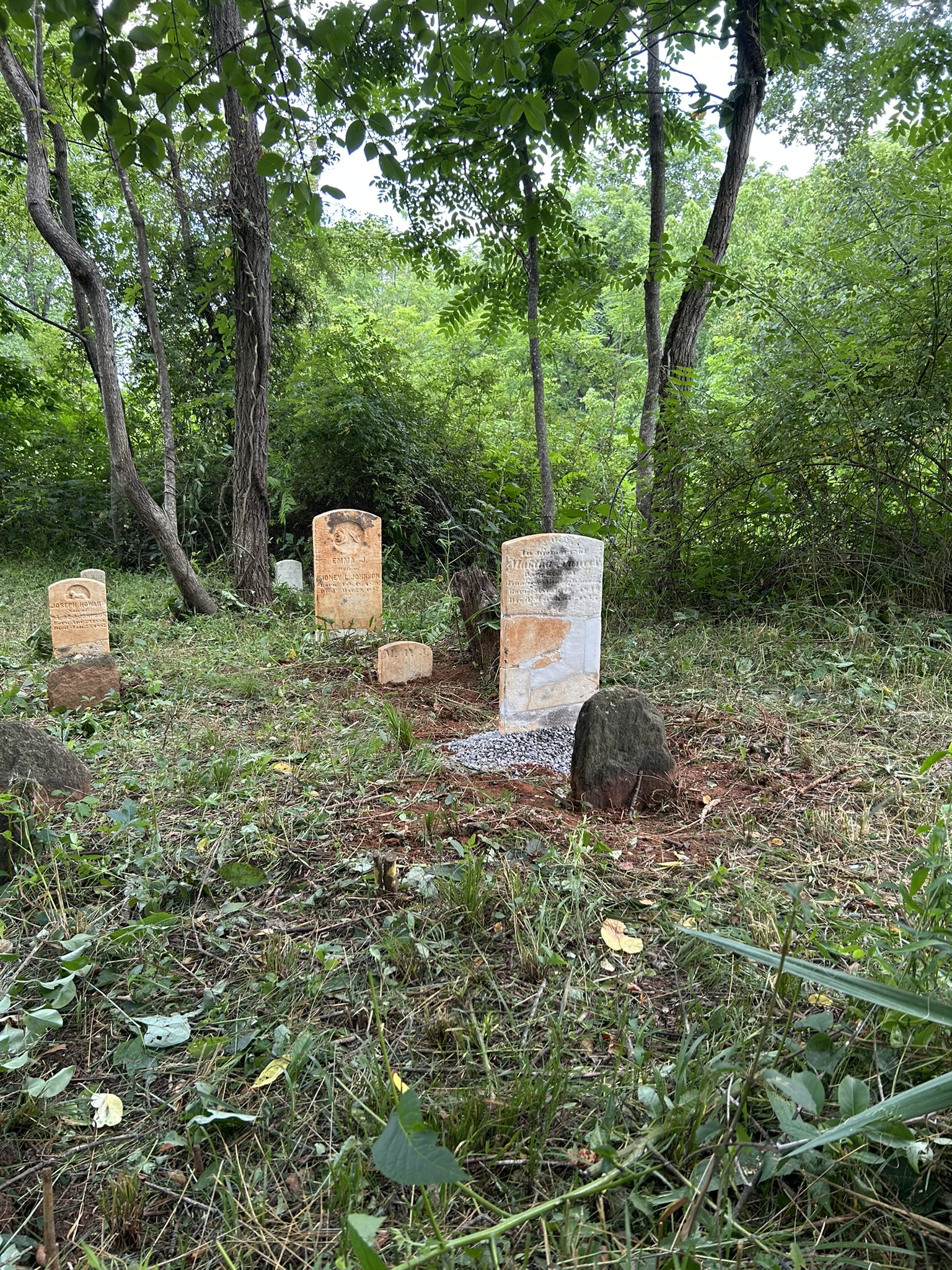
The more we searched, the more we found. Sunken fieldstones showed us burials long hidden. A badly damaged marble marker for Martha Frances Johnson surfaced, though most of it was missing. In another row, we spotted footstones marked “JHJ” and “EJJ.” Before long, we uncovered the top of a stone that matched— Emma Jane Pullen Johnson. Her story was tangled: connected to both Francis’ and George’s lines, with marriages tying the families back together after the Civil War. As we pieced the genealogy together, we found records of Emma and her husband’s infant son, Howard, who had died just before she did. Could the “JHJ” footstone belong to him? A return visit and careful probing confirmed it—it was Joseph Howard Johnson.
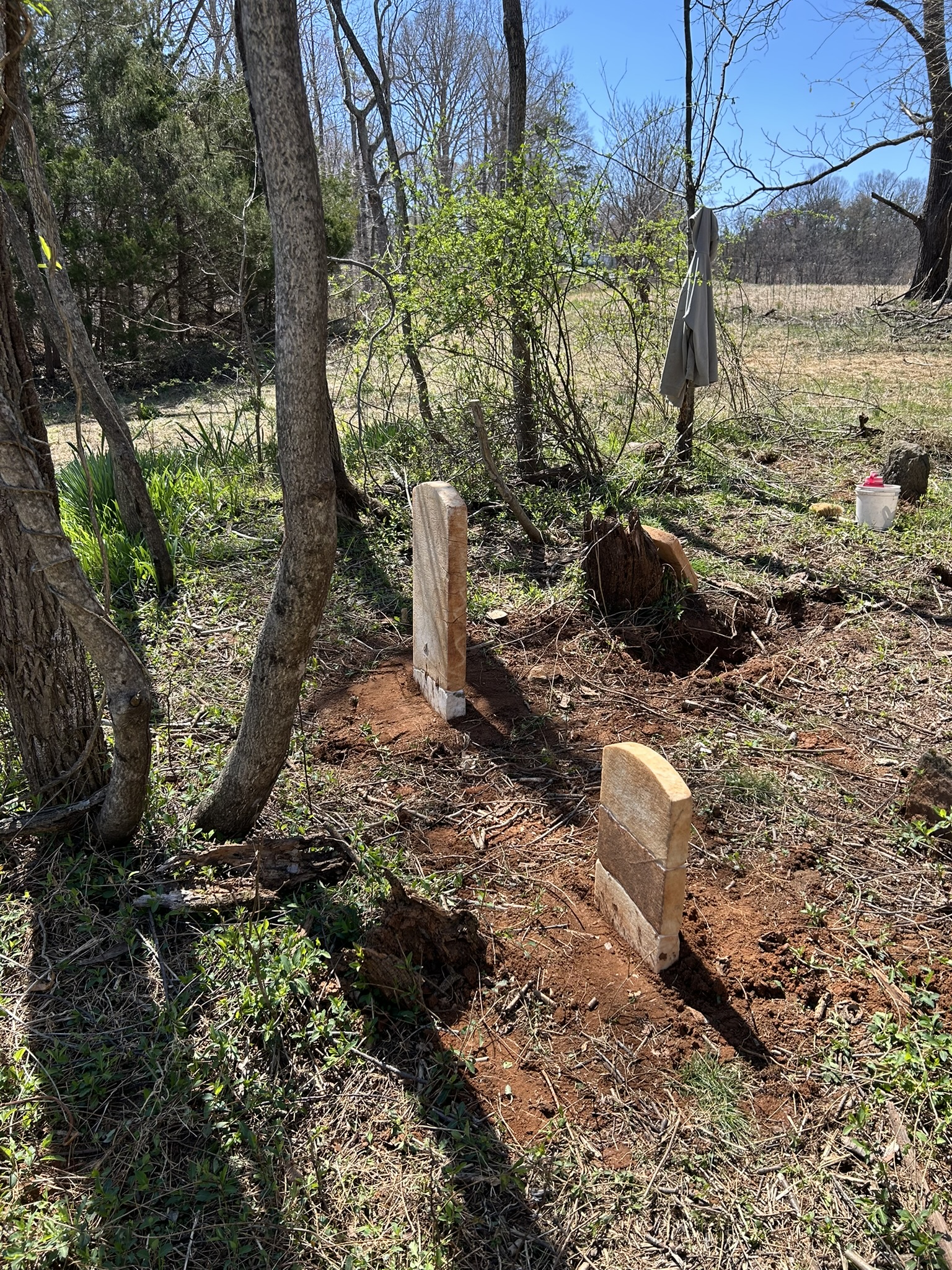
Discoveries continued even during the process of resetting. The Edwards sisters’ footstones were only located once we began re-erecting monuments, and the inscribed fieldstone for Francis Johnson himself surfaced while setting a marker for his granddaughter—astonishingly, the original stone had been repurposed as its base.
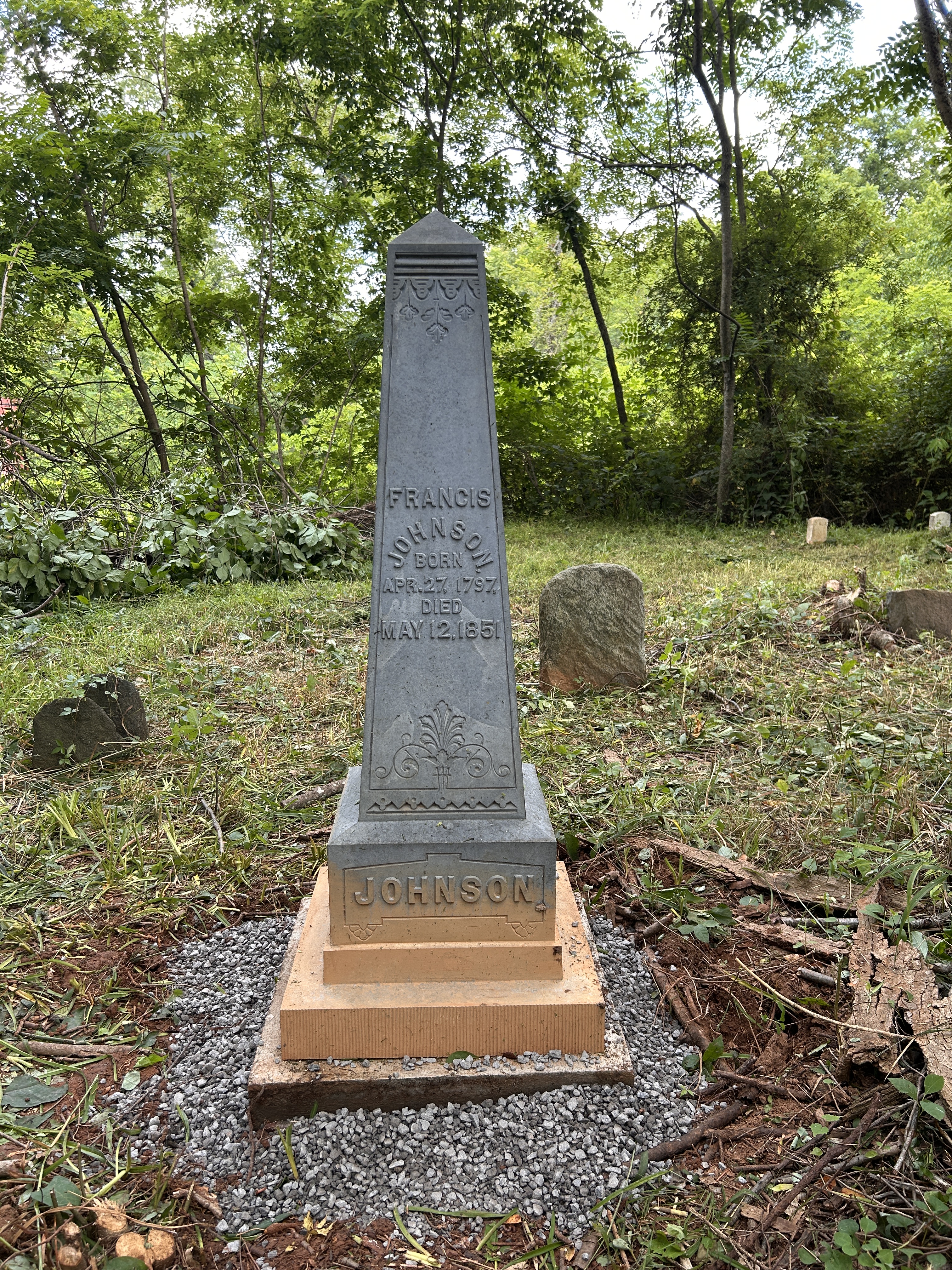
Freshly raised and reset zinc obelisk made by the Monumental Bronze Co.
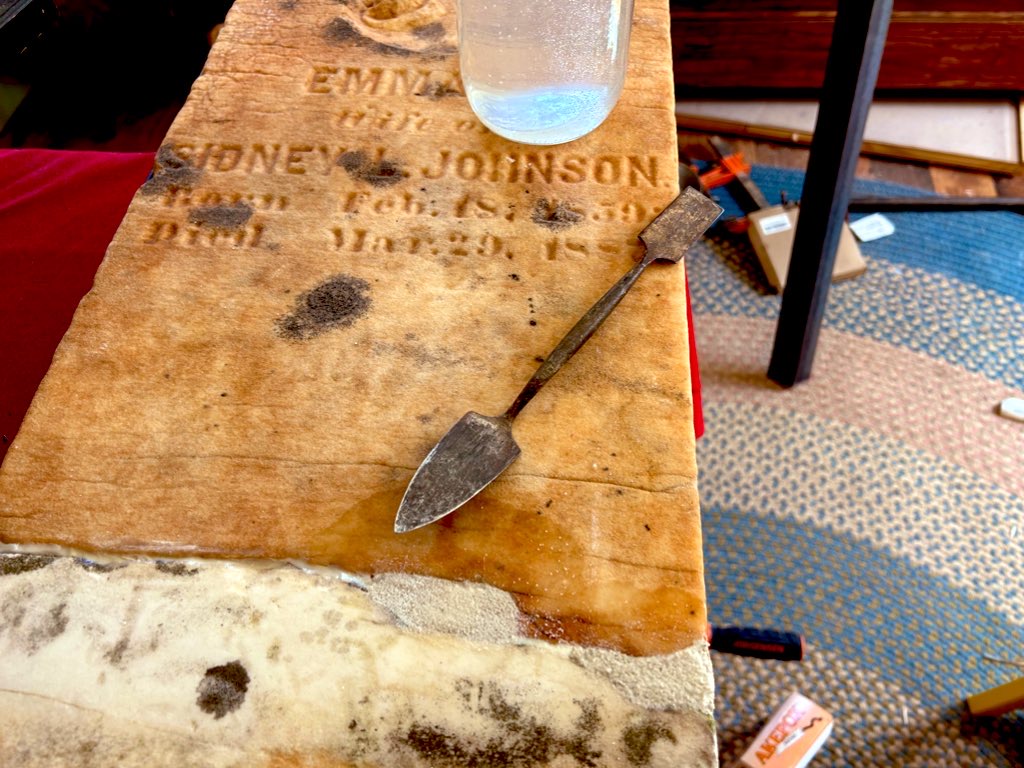
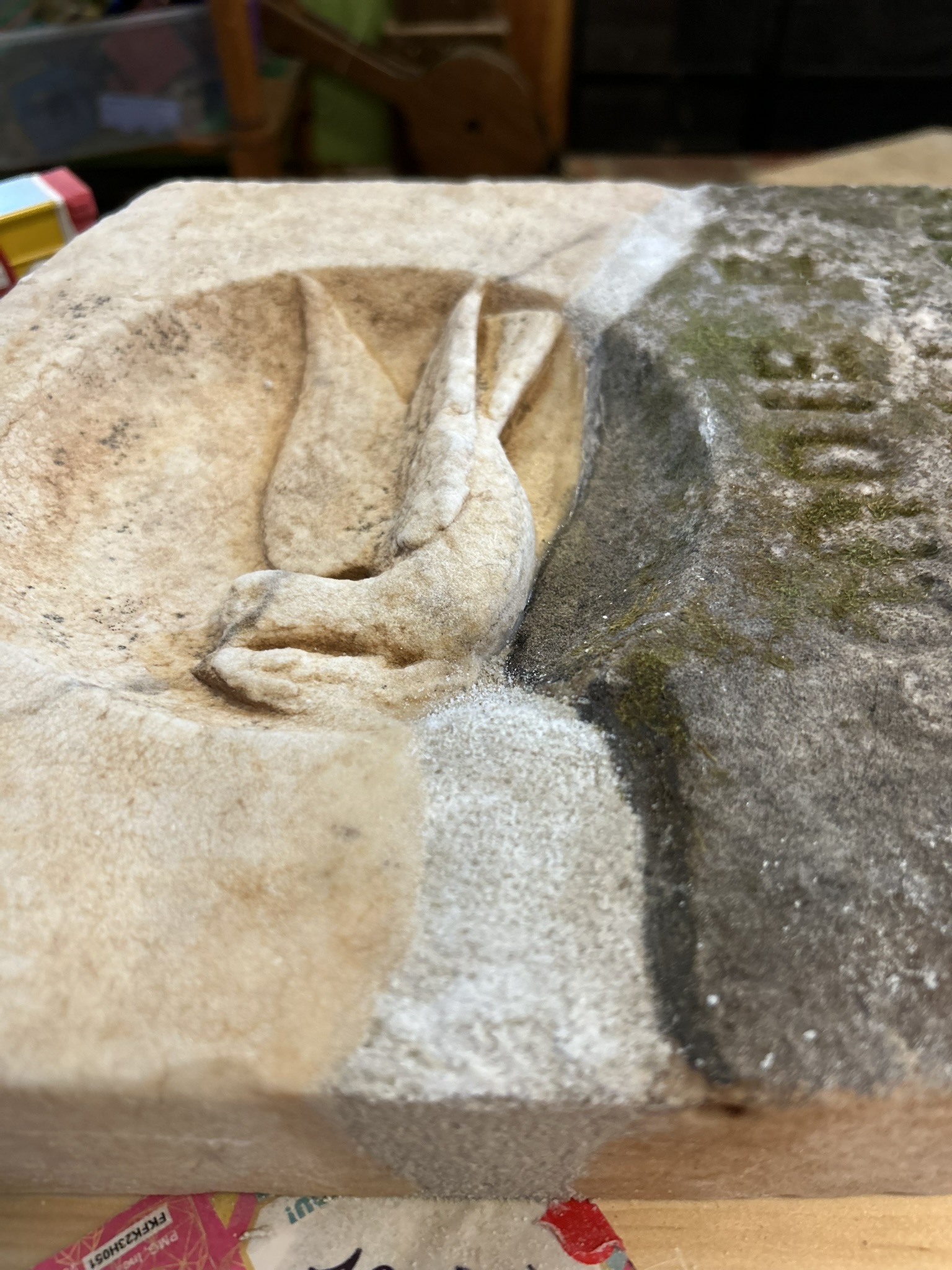
When possible, and especially in the colder weather, we like to bring markers indoors to repair. Markers required epoxy repairs, infill work, while others were reset after raising sunken bases. Though portions of Martha Frances Johnson’s marker could not be recovered, most others were located and successfully repaired. A final task was raising and resetting the uncommon zinc obelisk commemorating Francis Johnson and his two wives Susan and Nancy Wright Johnson, secured atop a new footer. In the process of setting these, we raised a number of sunken fieldstones.
We didn’t repair and reset Martha Frances Johnsons marker until nearly July as I kept holding out hope the next probe could locate the missing pieces needed, but alas several never showed. We carefully epoxied those found and provided infill for the missing and reset this final marker. After another weed eating and we were about done leaving only a final survey mapping and the plot was “completed.”
With 6 pieces found and several unable to be located we had to get creative with infill on this heavily warn marker
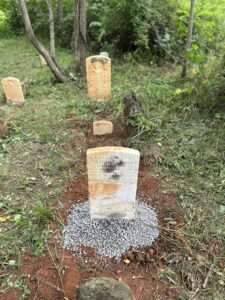
While there is never a truly final result in any cemetery, here are some photos of it with our restorative efforts completed.
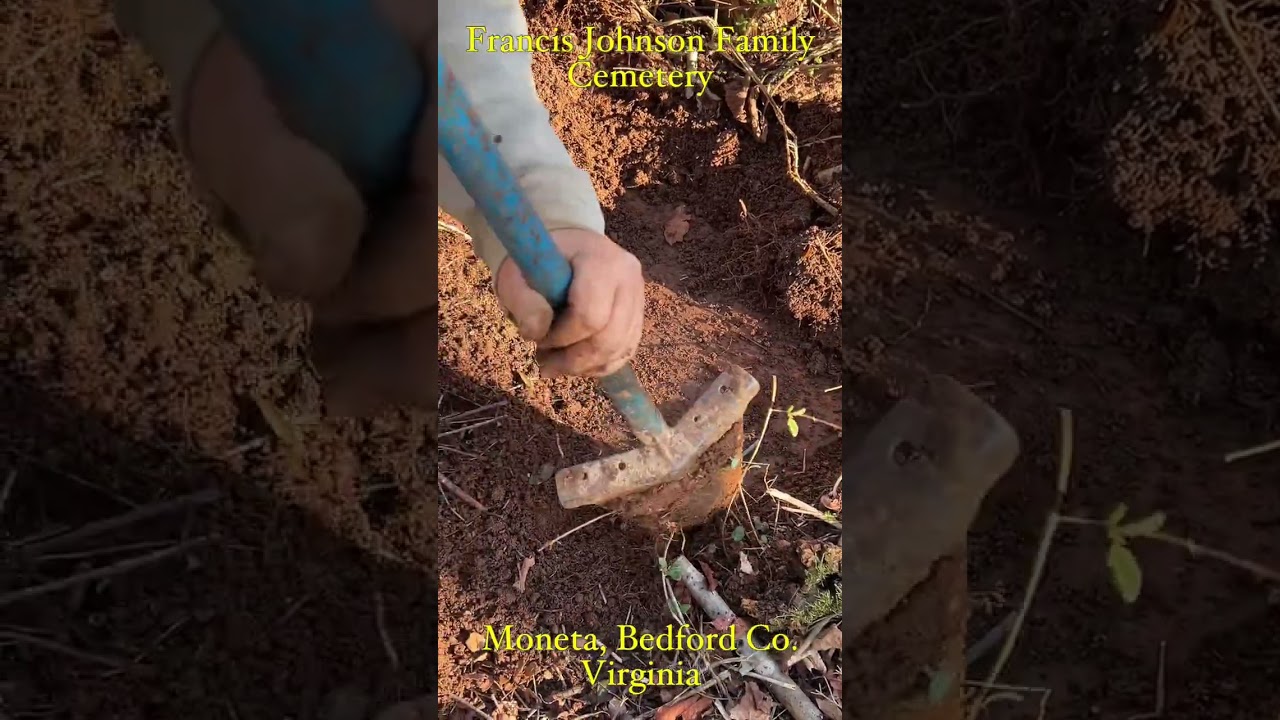
See below to check out additional videos of the restoration project!