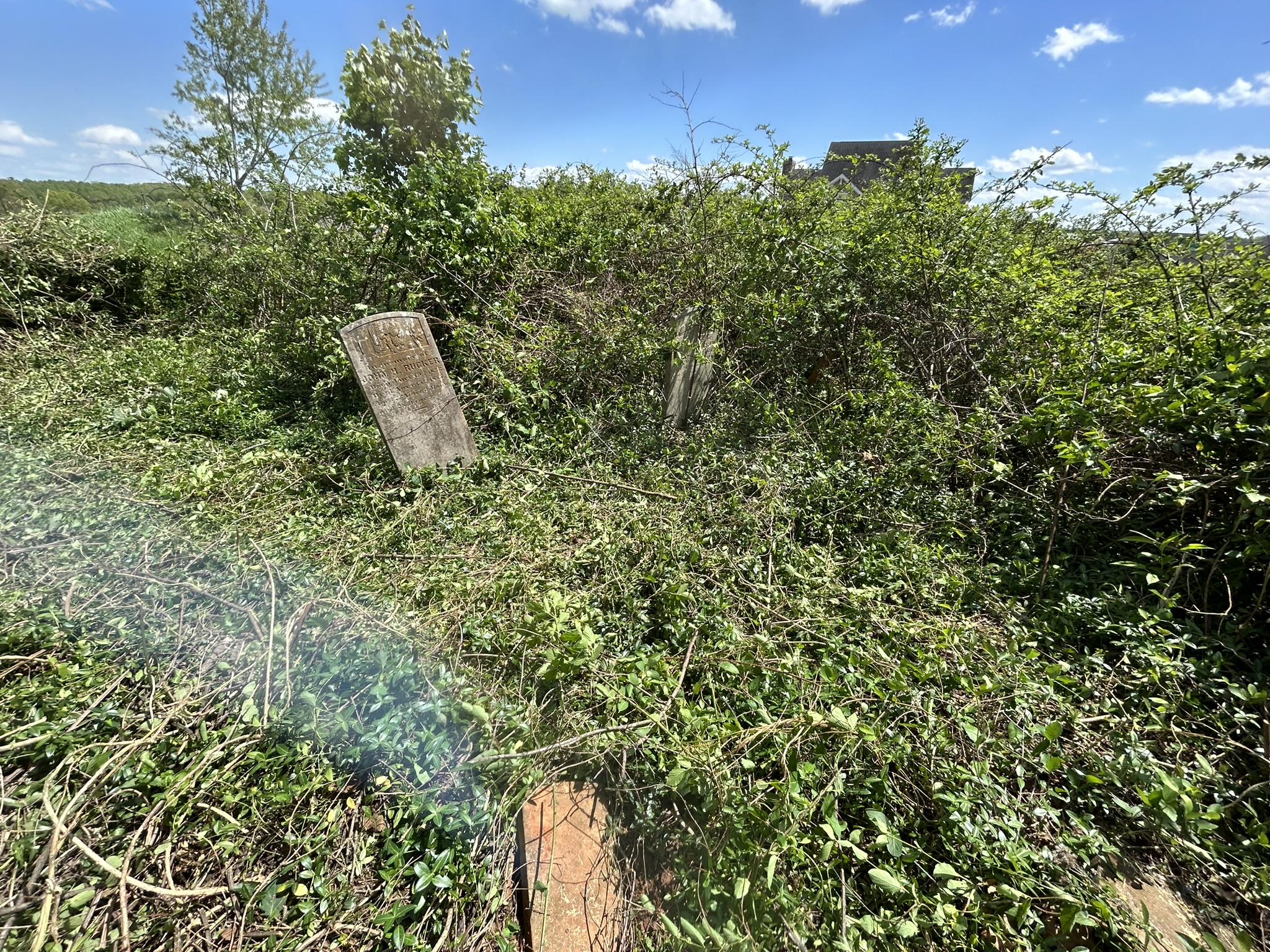
The Anthony Rucker Family Cemetery #1036 is one of those sites we first “laid eyes on” nearly ten years ago. I use quotes because, truthfully, at that time there was very little to see: the entire plot was completely overgrown, swallowed up by decades of blackberry thicket and quite nearly inaccessible. The term inaccessible is tossed around often when it comes to old burial grounds – and we’ve done our fair share of crawling through brush – but this literally was so thick with brambles you physically could not pass through most of the small plot.
The cemetery sits in the Hendricks Store area at the edge of what was once the proposed Sunset Cay development—a 1,500-home project that collapsed after the 2008 real estate crash. Stories vary, but the plan included a commercial plaza, with design work attributed to Marie Abercrombie, and rumored connections to Abercrombie & Fitch. Whatever the details, the project ground to a halt, and during that period the cemetery likely suffered. Photos from around 2007 show the plot completely stripped bare—likely sprayed—its vegetation gone and nearly every marker toppled, broken, and unreadable.
The clearing begins with a great many prickers, stickers and thorns
Clearing the OVERGrowth
The physical clearing of the site was grueling but fairly quick: three days, about 12–14 hours of labor. The thicket was a dense weave of dead and living blackberry, raspberry, and wineberry, tangled with saplings and pokeweed. Years of dried, woody briars—some three-quarters of an inch thick and five feet tall—made removal especially difficult. Hilary and I have developed a system: one person pushes growth back while the other cuts, followed by joint hauling and piling. In tight plots like this, half the battle is not just cutting but also removing debris. That’s why I favor lighter, one-handed tools like shears or machetes over the heavier brushcutter as they provide a more neat and orderly clearing and cleanup process—swinging a 30-pound machine is tiring enough without then having to bend and clear scattered debris.
The process, documented in the first few videos viewable below, began with hand tools, then chainsaws, and finally a brushcutter to clear stumps and clear growth to ground level. The first 6–18 months post-clearing are always the most critical. We focus on repeated weed-eating—sometimes with circular saw blades—while carefully preserving beneficial ground covers like periwinkle. Our videos (unintentionally) show how the vegetative succession works: woody weeds give way thinner weeds and then to periwinkle and light grasses. Notably, in the latest footage, the plot had regrown significantly but with zero briars—just a healthy periwinkle carpet and scattered wild grass.
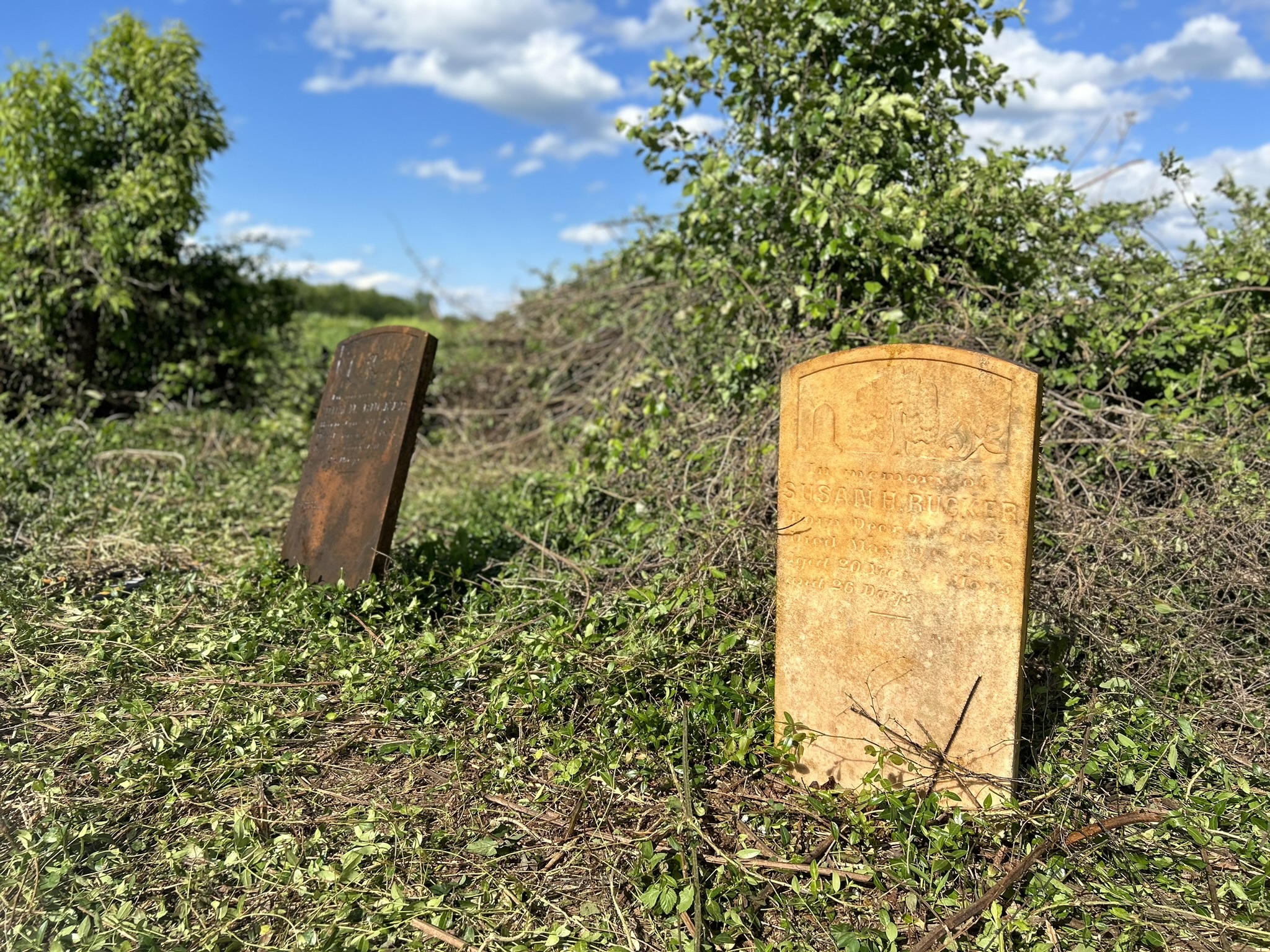
Markers showing a remarkably varied "blush" post biologic cleaner application
Restoring the Markers
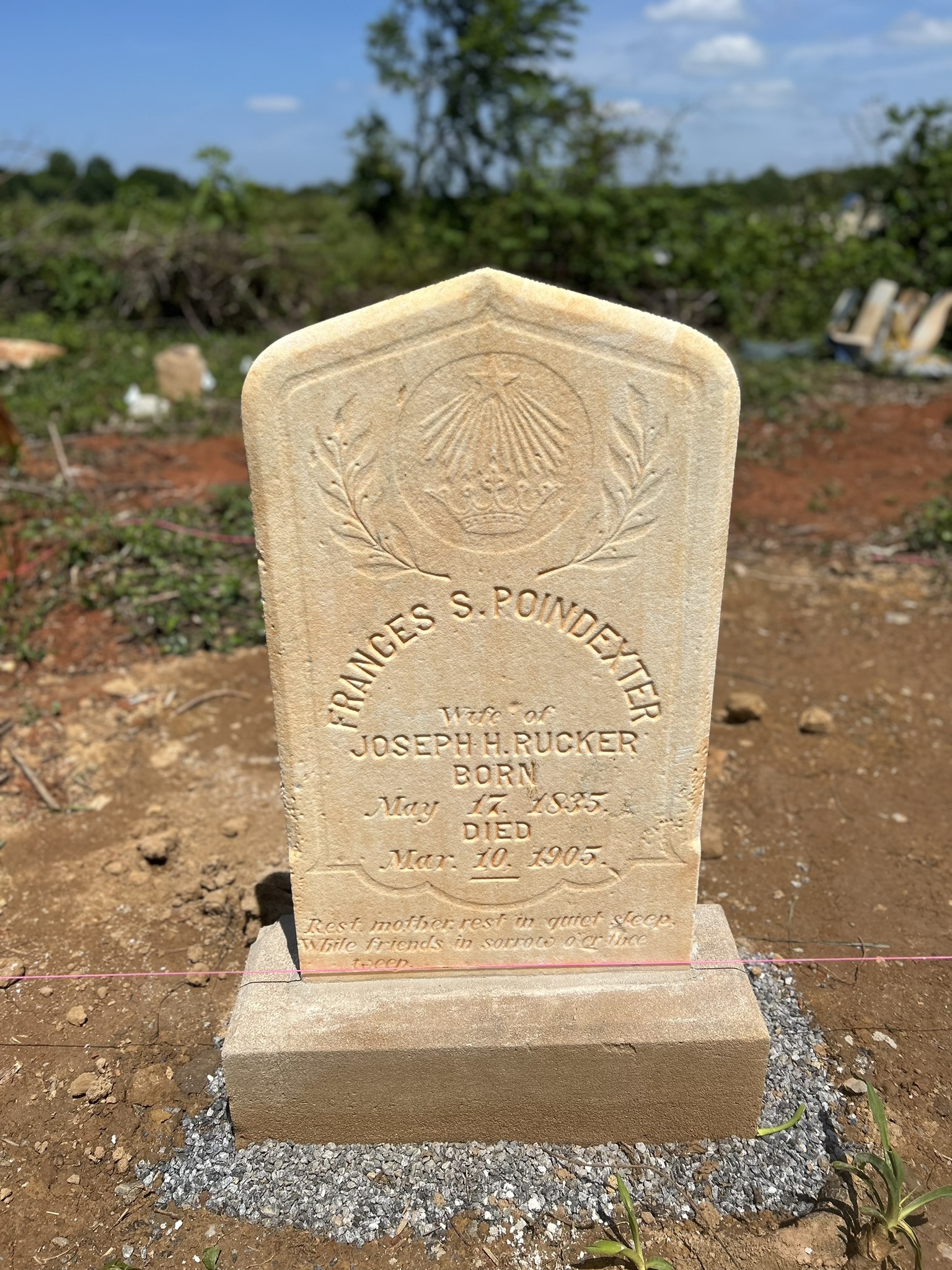
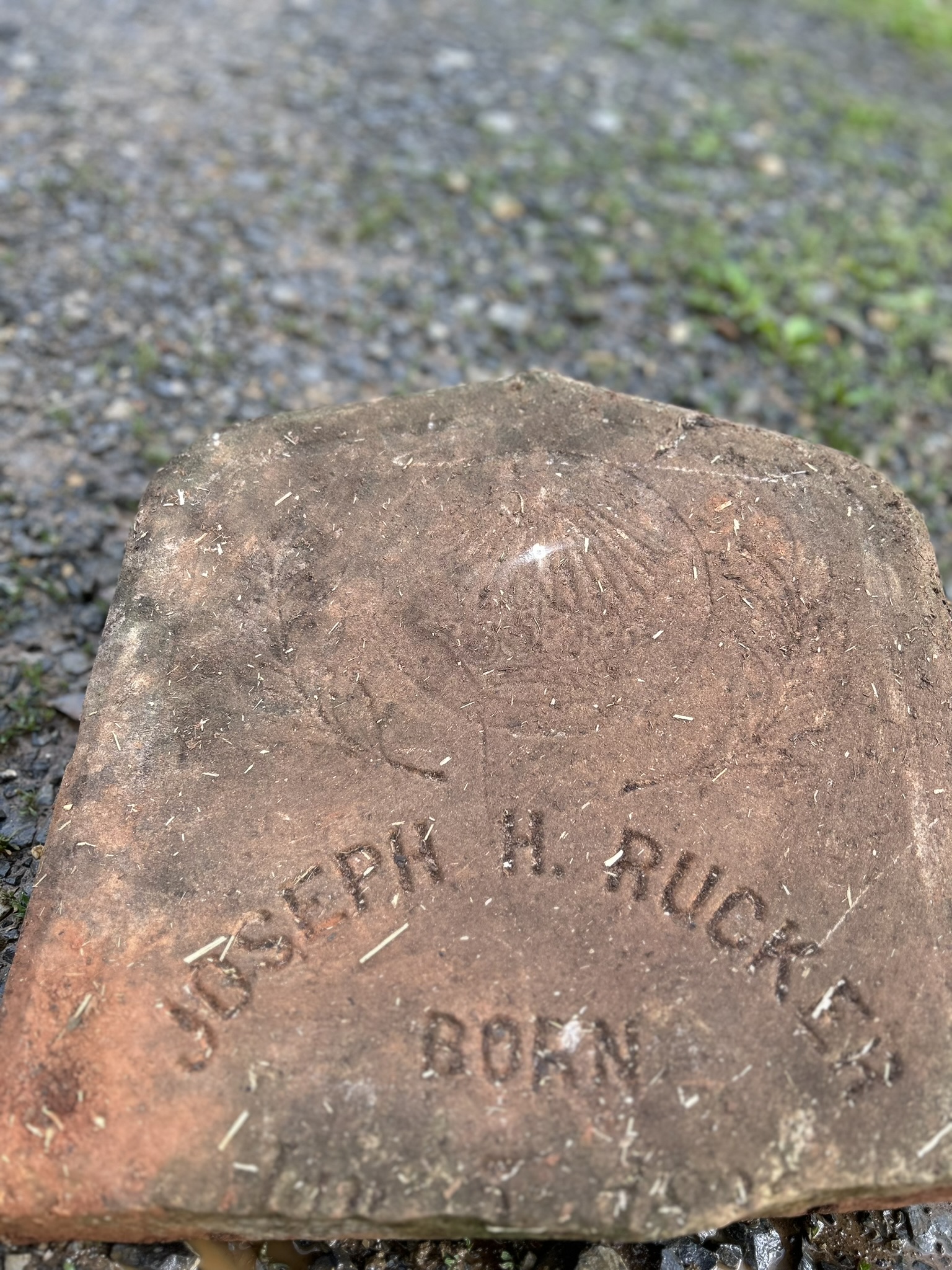
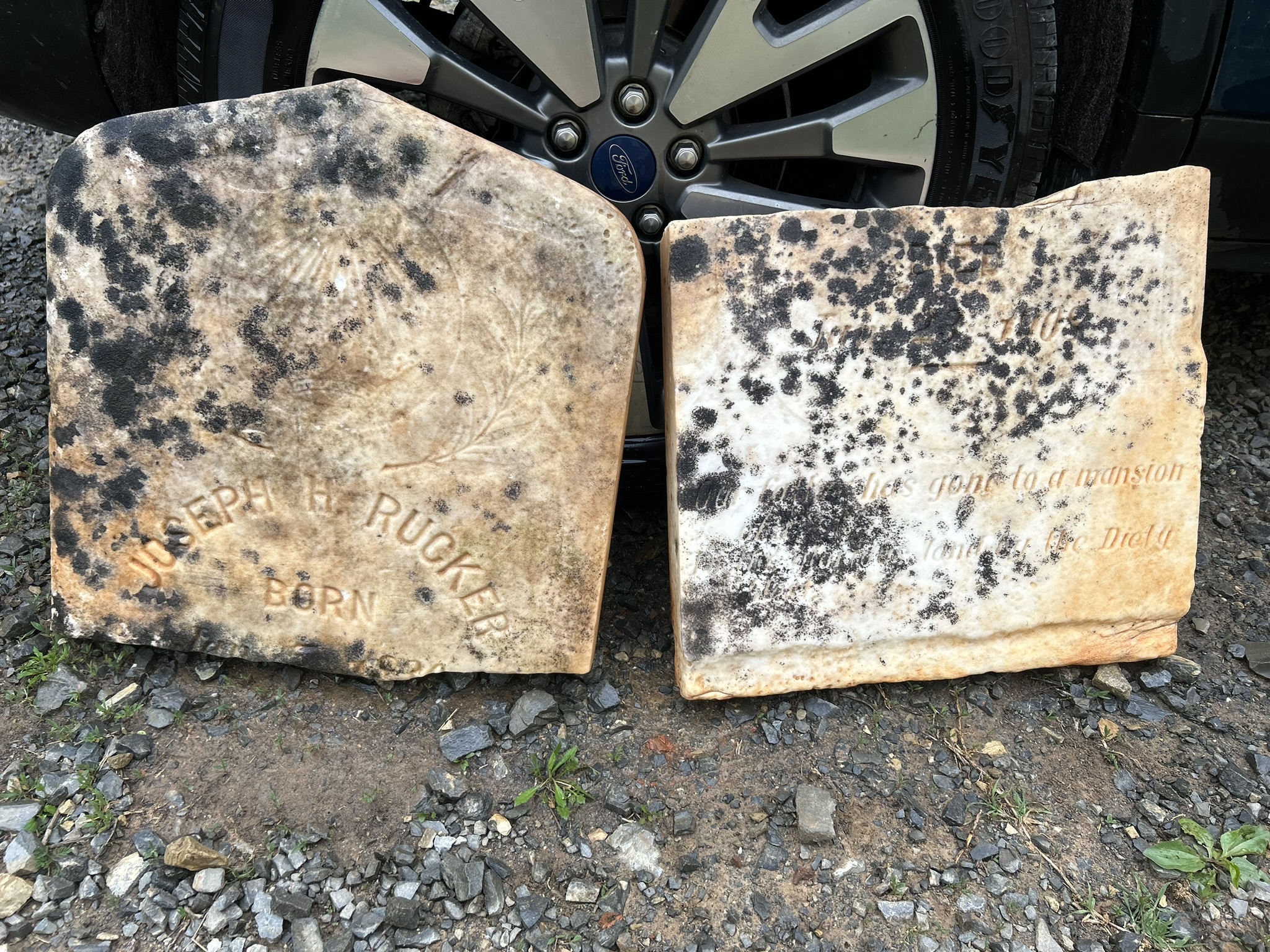
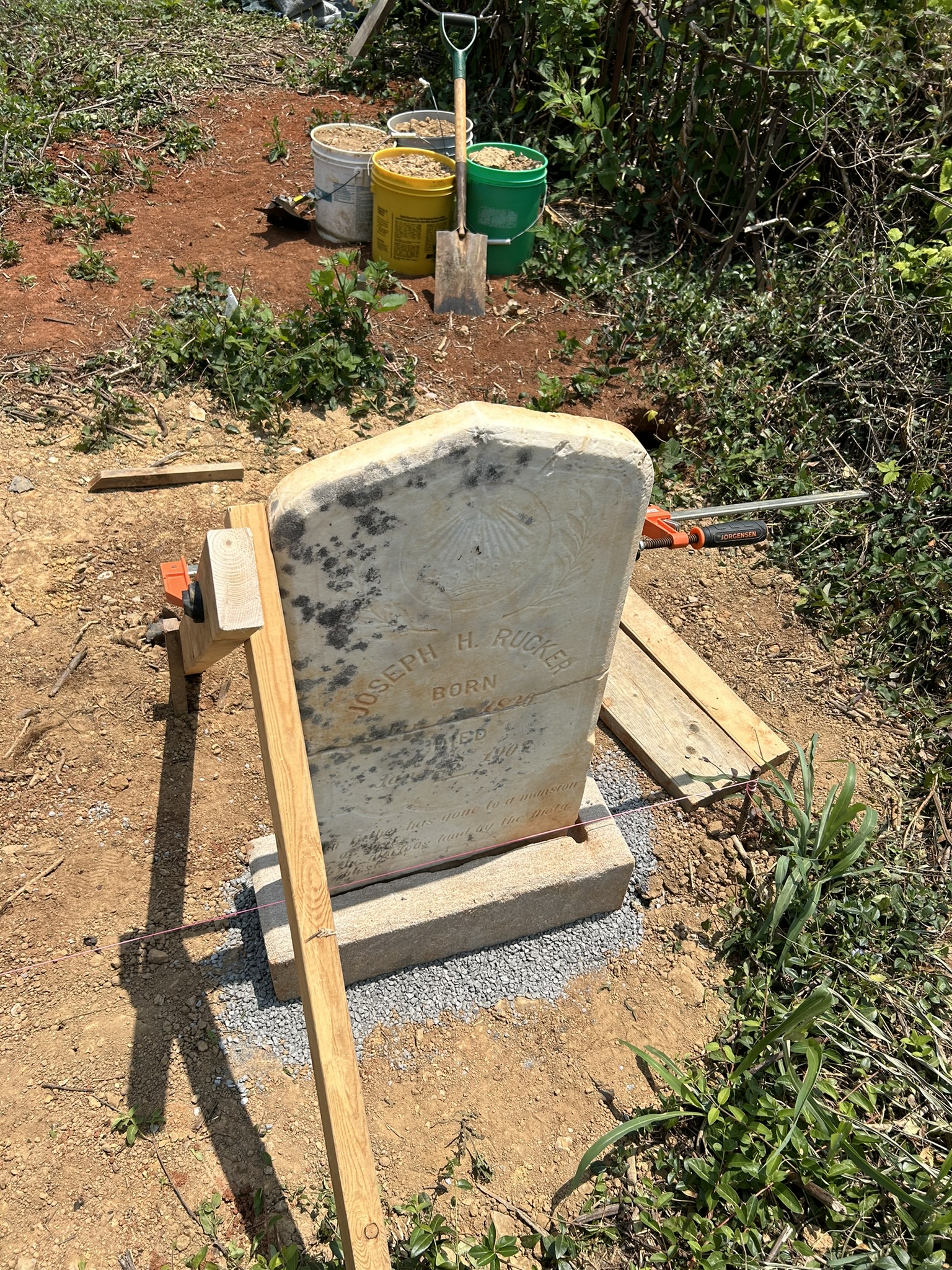
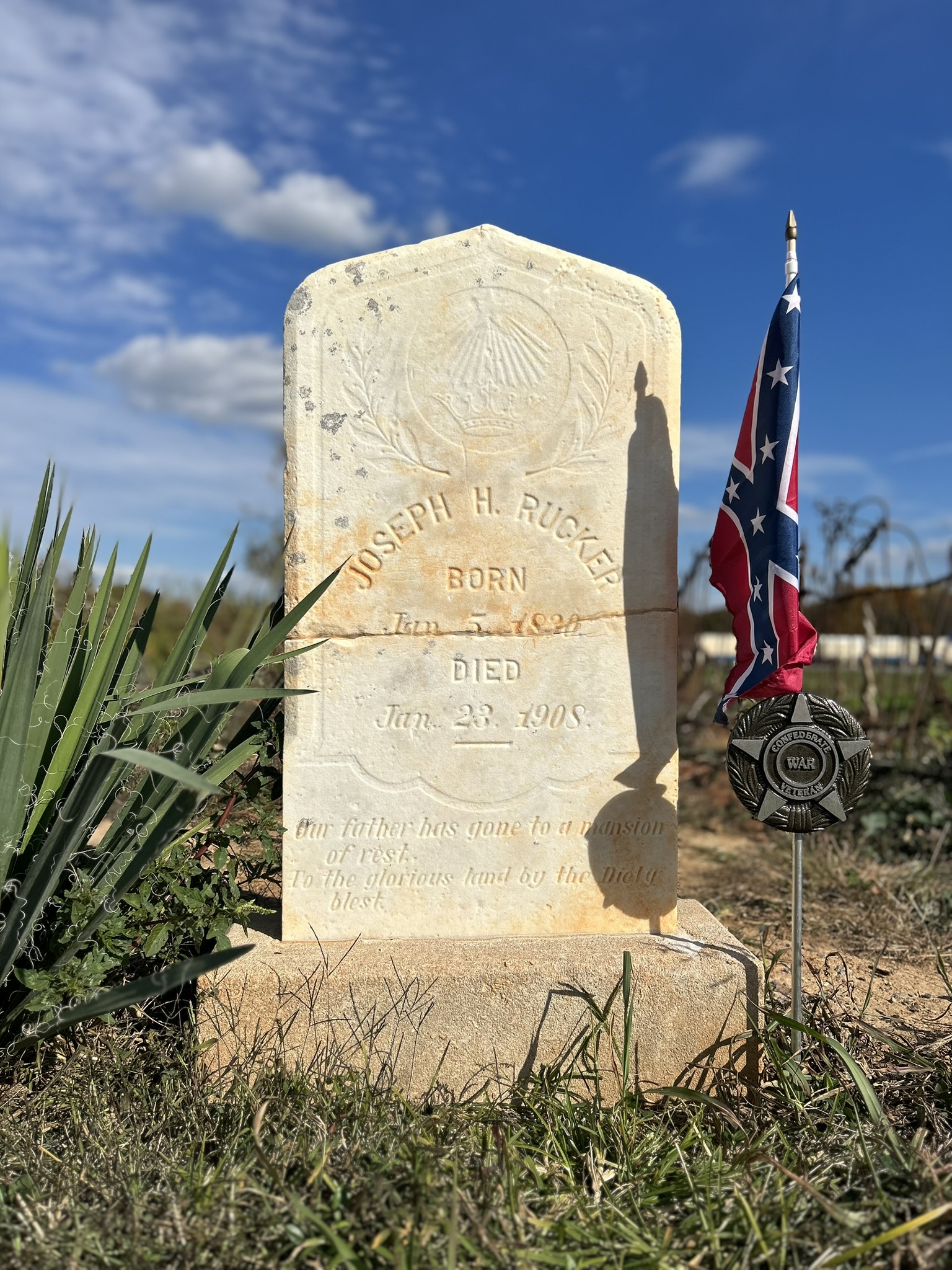
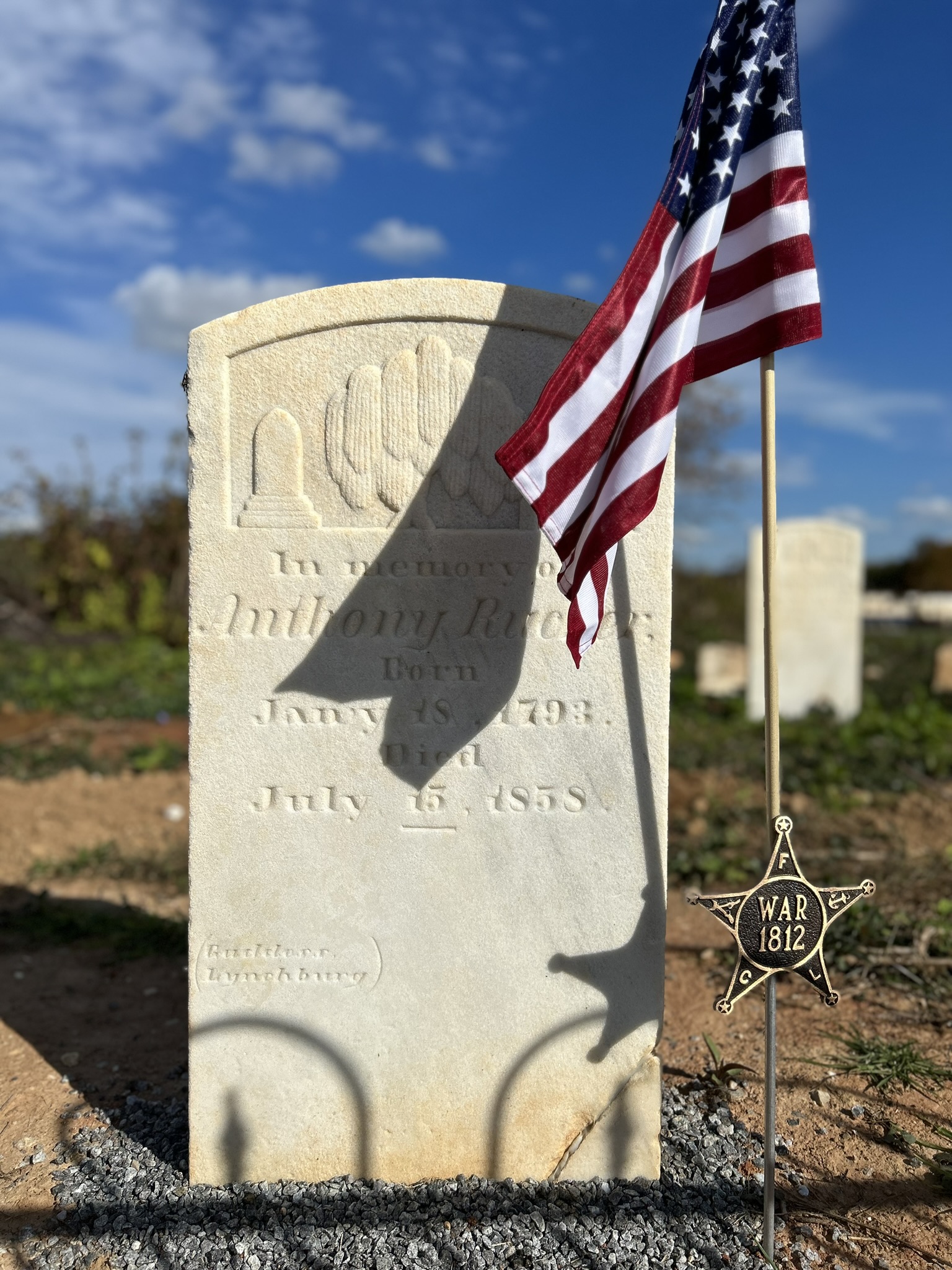
Most of the markers required repair. Anthony Rucker and his son Joseph Rucker’s stones were fractured, while others had simply toppled, sunk, or leaned at odd angles. Almost every burial had a footstone that was sunken, broken or missing.
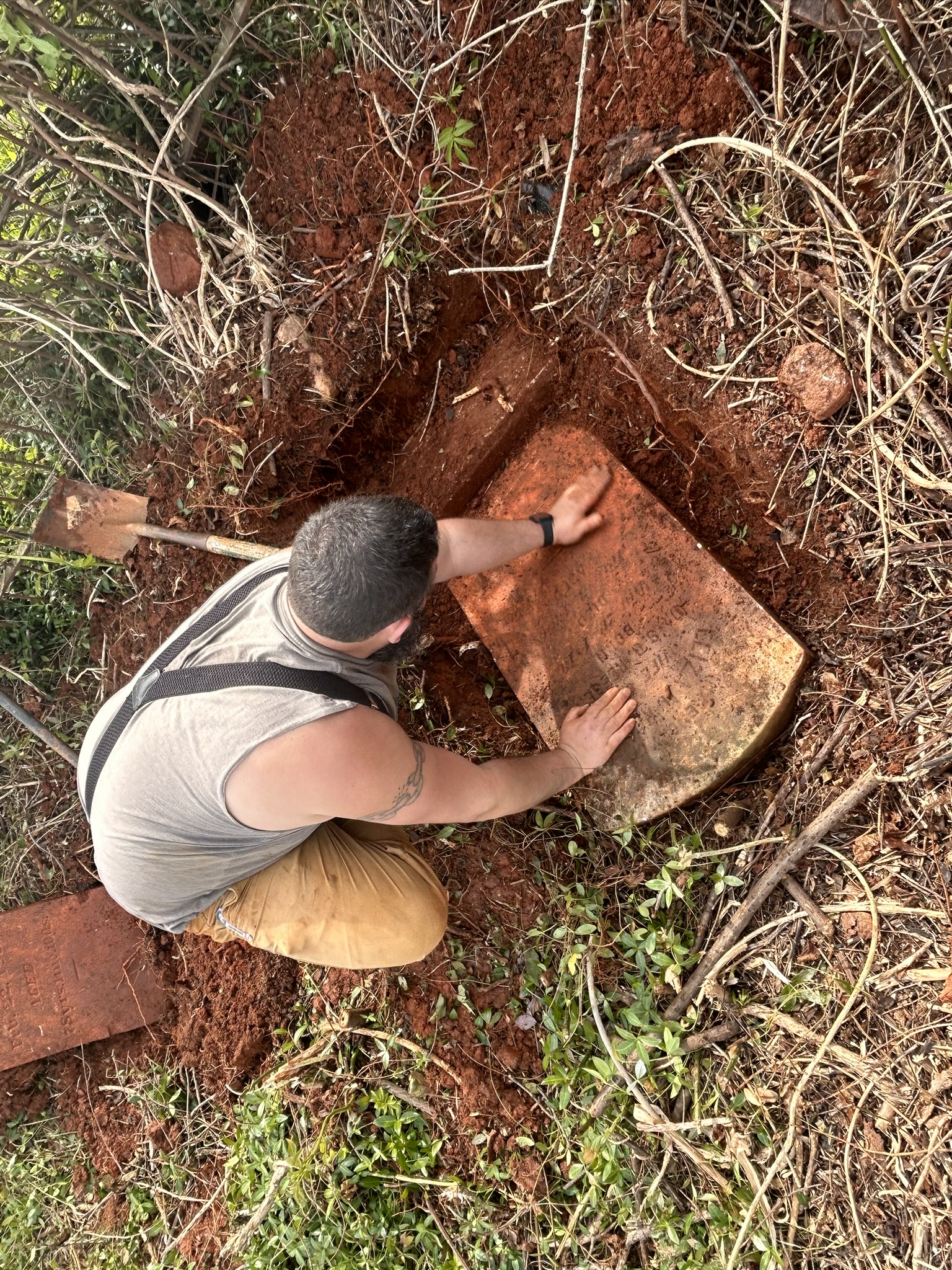
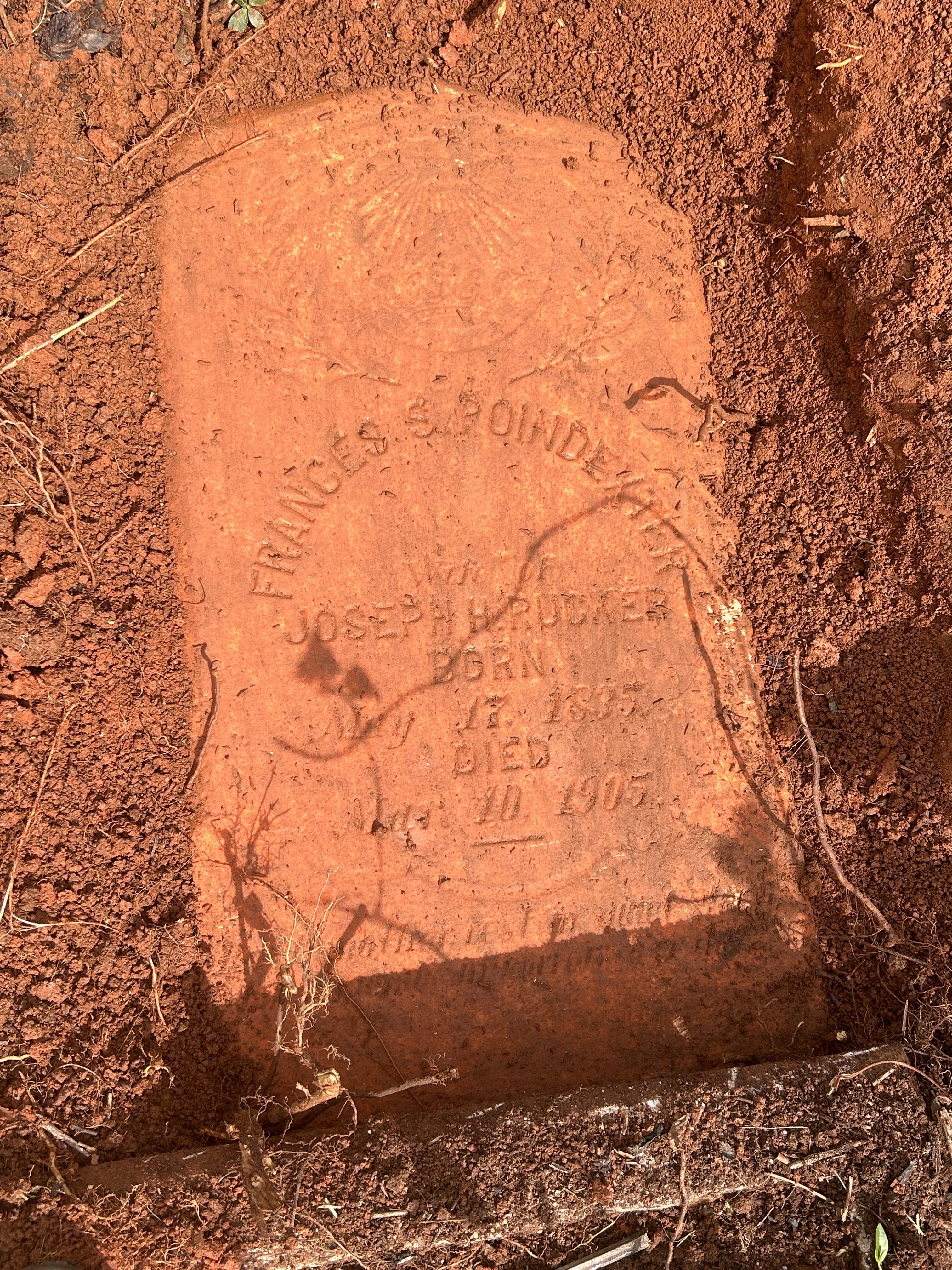
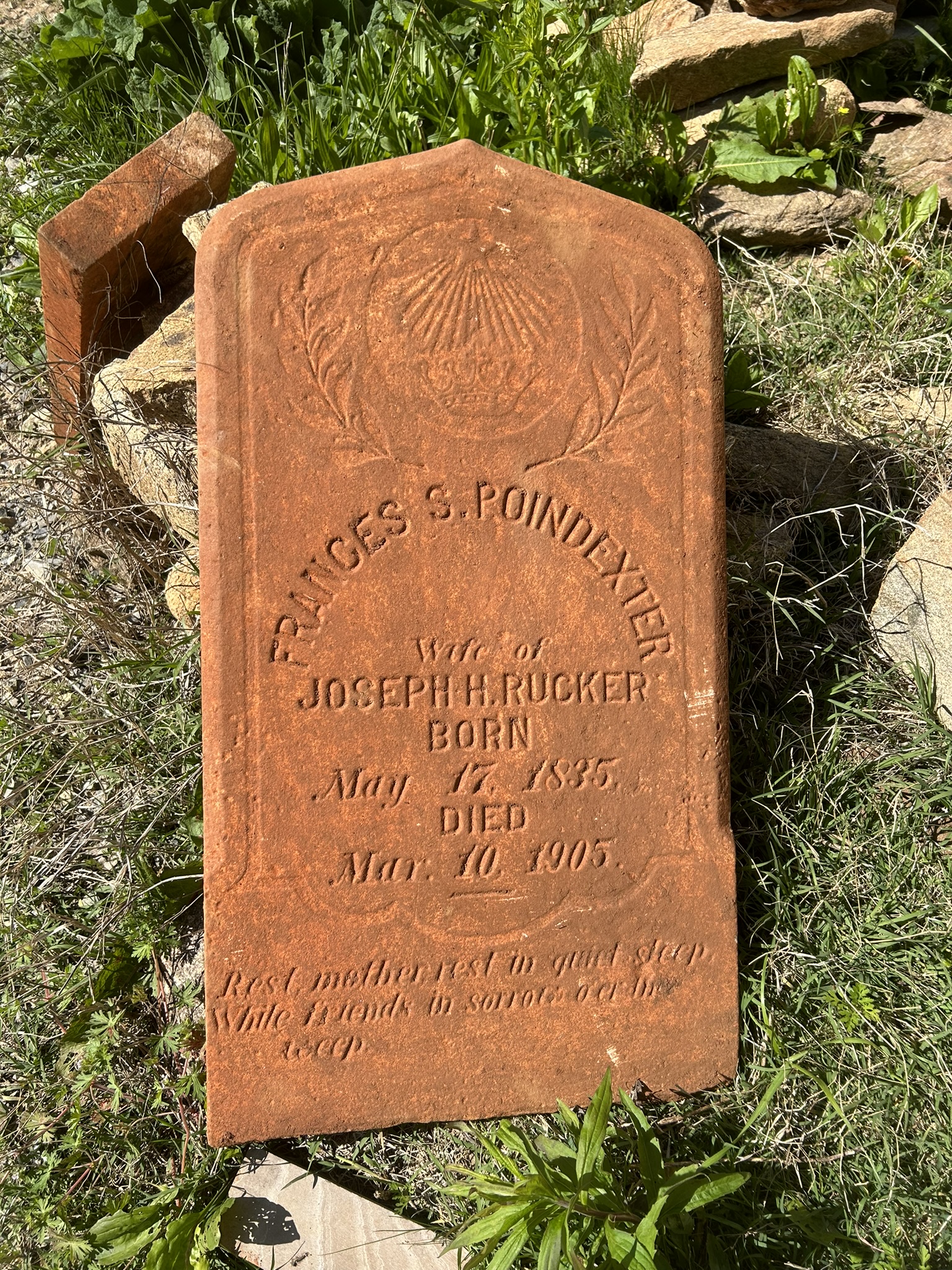
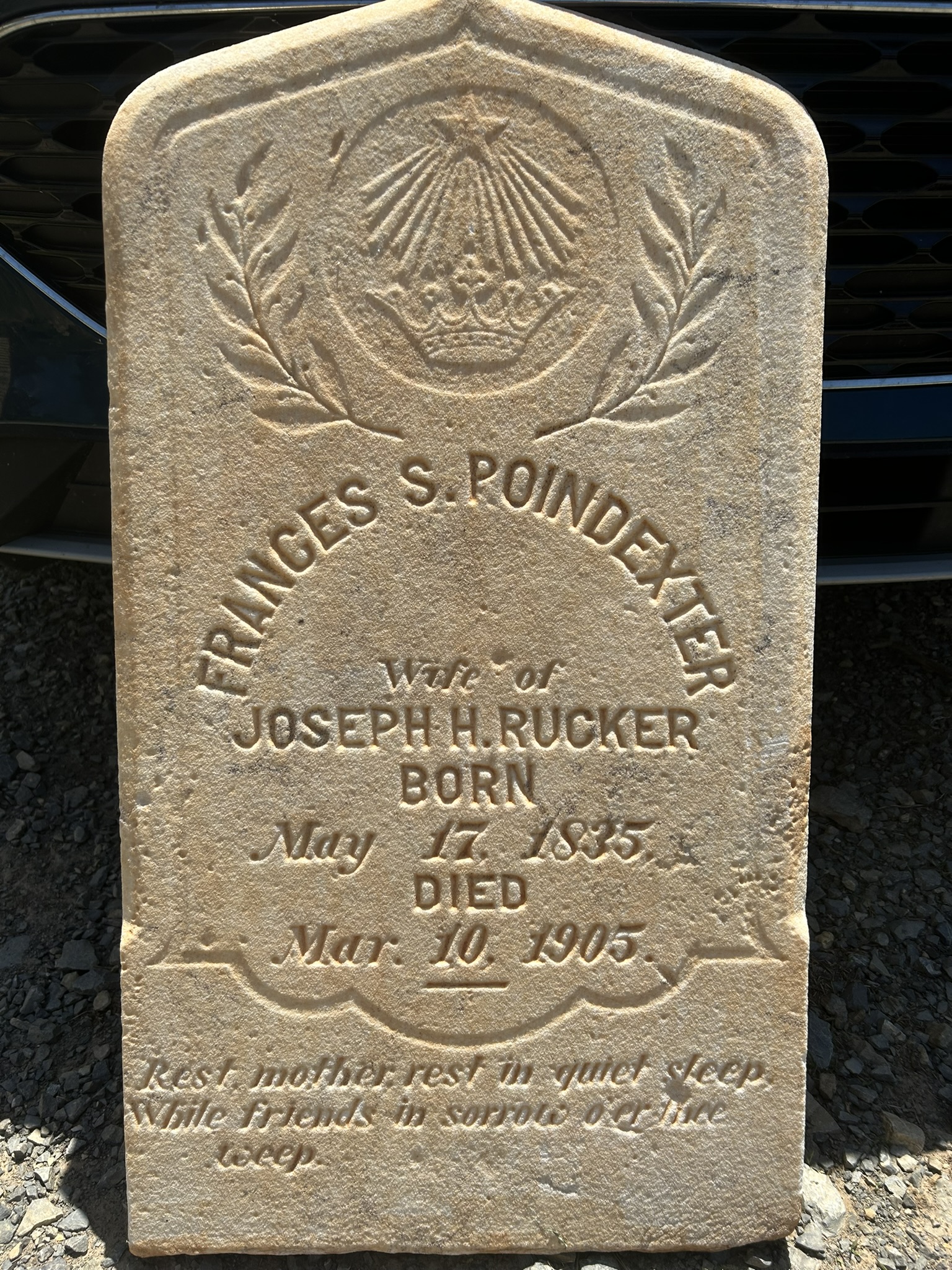
Fortunately, every base remained in place, albeit sunken and were still usable. The cemetery showcases a range of marker styles: earlier tablets, later die-in-socket markers, and even a less common hybrid with tenon-and-ears for Dr. Silas Reese. One pattern we’ve noticed—though unscientifically observed—is that earlier markers (1840s–1870s) seem less prone to the deep iron-rich red clay staining than later marble stones (1880s–1920s). Still, several markers, including Margaret Rucker’s and the Reese family stones, remain heavily stained even 2 years later. Over time, they may lighten, but iron-based staining lies beyond the reach of cleaning solutions like D/2, Endurance, or other quaternary ammonium products.
Unearthing a die-in-socket marker belonging to Eliza M Reese Rucker
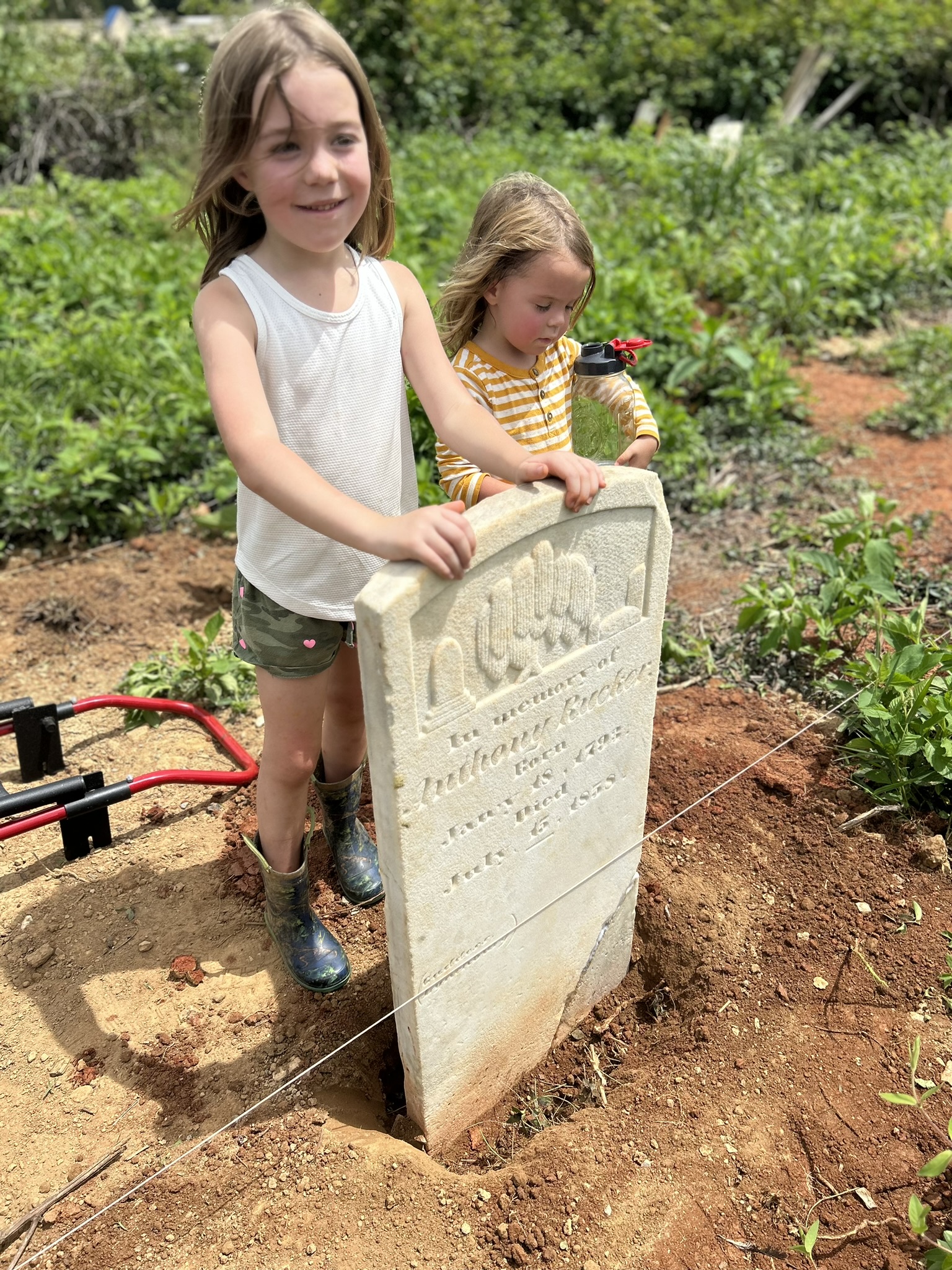
Quality assistants are crucial!
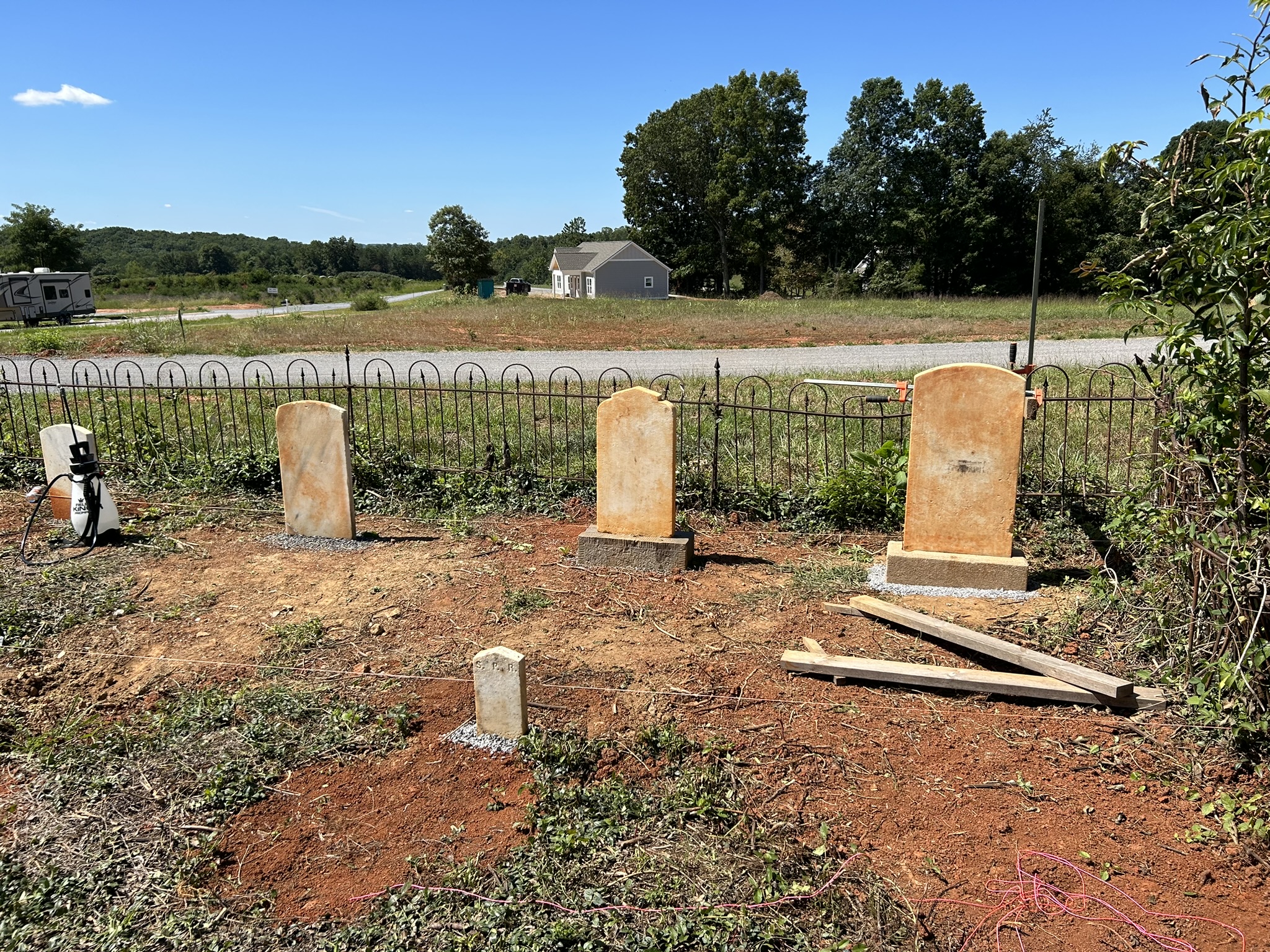
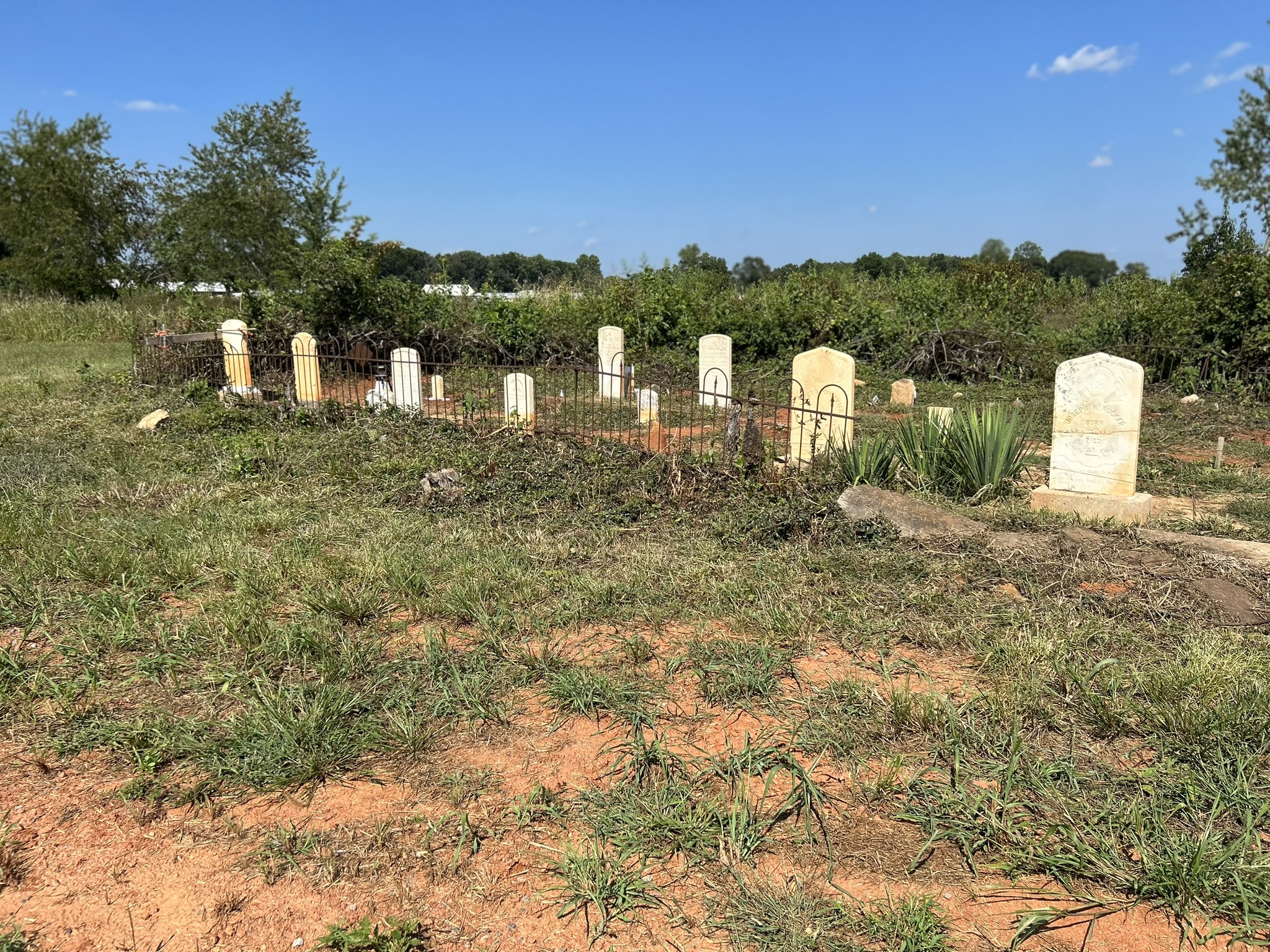
Because this plot is laid more or less in a general square, we used a string line to reset the headstones neatly in order—especially appropriate here since the first row contained seven burials, most of whose markers had shifted or been buried, and we had to roughly estimate original placements. Footstones placement in family plots often vary: sometimes aligned in perfect rows, sometimes placed according to the size or age of the deceased. Here, with primarily adult burials, we chose to line them up evenly when original placement wasn’t identifiable.
From near-invisibility to a restoration, the Anthony Rucker Family Cemetery stands as a reminder of resilience—of both the families who rest here and of the memorializing structures, like the battered wrought-iron fence, that stubbornly kept the site from vanishing altogether.
This project illustrates how fragile these places can be. A single development project, coupled with some years of neglect, or the slow creep of invasive growth can very nearly erase generations of history. Yet it also shows how much can be regained through even a modest effort: a handful of days of a few folks with hand tools, care in both interpreting the site, resetting markers, and the steady maintenance of ground cover have turned a lost thicket into a visible, ordered family burial ground once more.
Repaired and reset marker for Anthony Rucker, a soldier of the War of 1812
View of the plot with all markers reset
The site also testifies to the importance of memory and stewardship. Each cemetery has its defenders—sometimes descendants, sometimes neighbors, sometimes researchers or other stakeholders who stumble upon it—and many plots themselves have their own defenses, whether a dry stacked stone wall, wrought or barbed fences, or the persistence of yucca or periwinkle. In the case of the Rucker Cemetery, the bent and broken ironwork may look today like a bit of an eyesore, but it became the unlikely safeguard of a family’s legacy.
For us, working in and to restore sites like this is not just about clearing brush or standing markers upright. It is about restoring dignity, making the names not just legible but known and remembered again, and ensuring that the story of a family and a community is not lost to time. Every person, rich or poor, played a role and had a place in the shared history of Bedford County, Virginia – and that story deserves to be told. The Anthony Rucker Family Cemetery is once again visible, ordered, and recognizable—not only as a resting place but as a historical marker in its own right.